Choose home appliances around the space and the routine
Bring dimensions, label units and complete purchase costs into one practical comparison.
Updated:
Describe the job before the shortlist
Start with the household task and the space available, rather than a preferred brand or the largest advertised capacity. Energy Saving Trust advises considering the size you need alongside the energy label. A larger appliance with an attractive efficiency class is not automatically the best fit for a smaller routine.
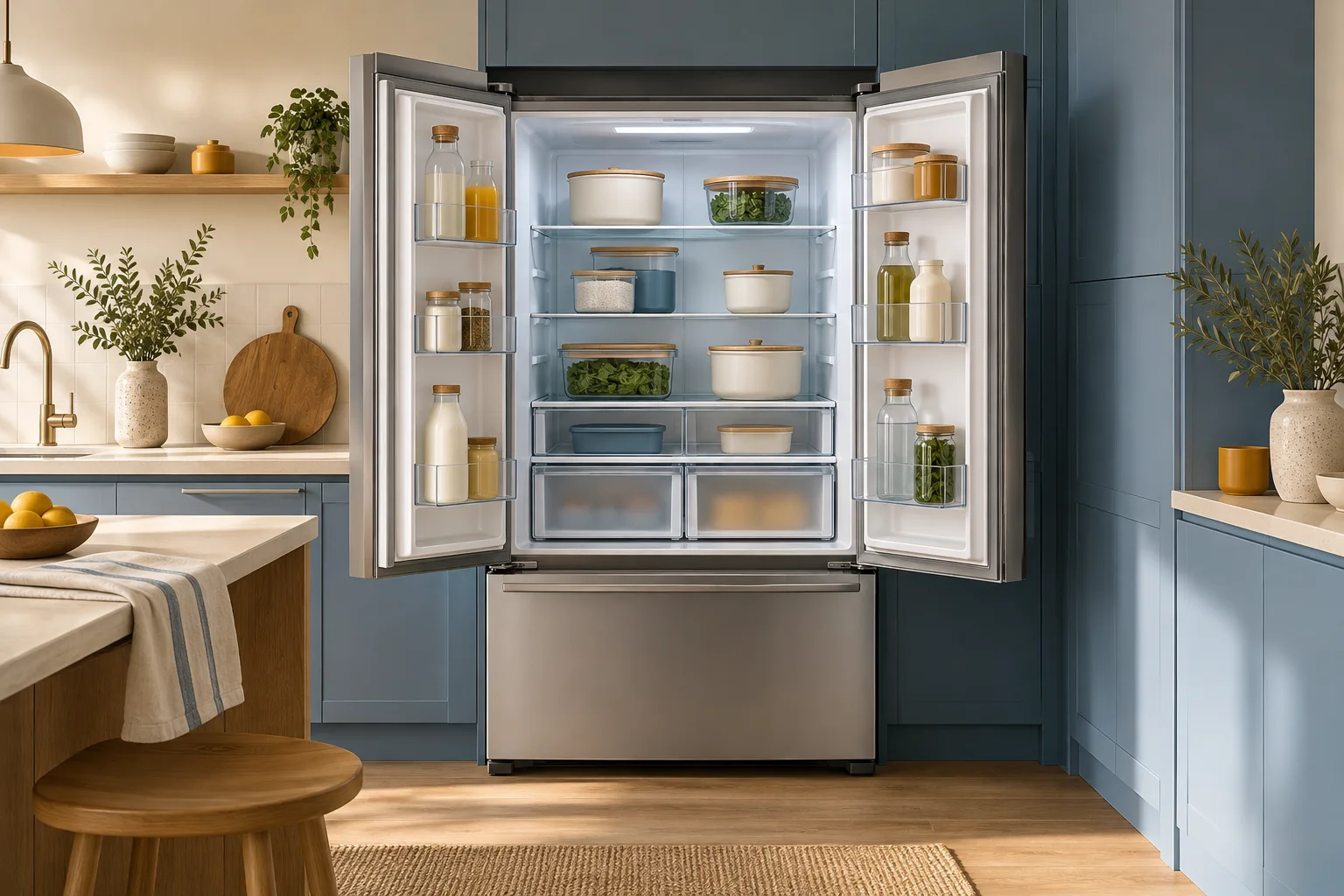
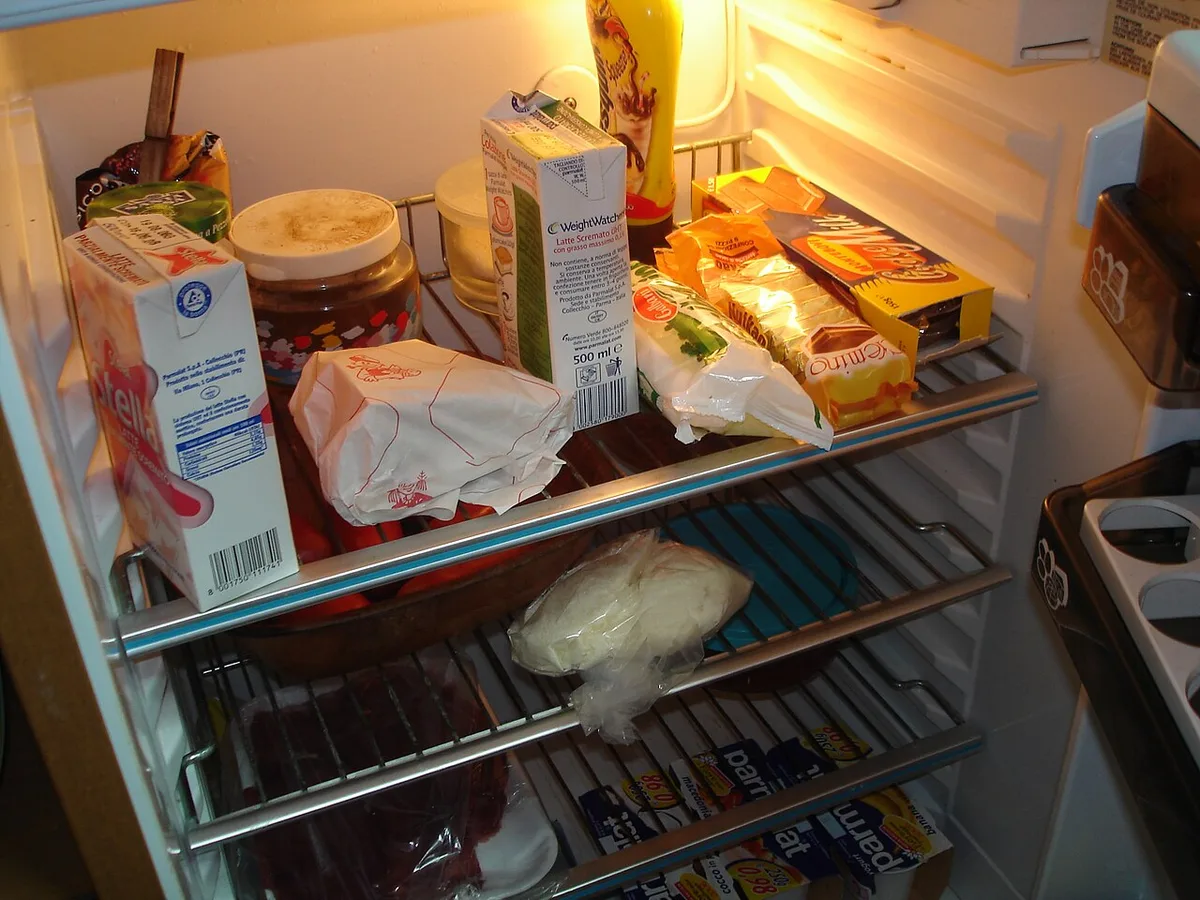
Record what you regularly store, wash or clean, and what is awkward about the existing arrangement. The refrigerator photograph shows shelves and packages of different shapes. It illustrates why the internal arrangement deserves attention, but it does not establish a universal capacity requirement or endorse the way food is stored in that historical image.
Energy Saving Trust: home appliance labels ?
Measure the whole installation decision
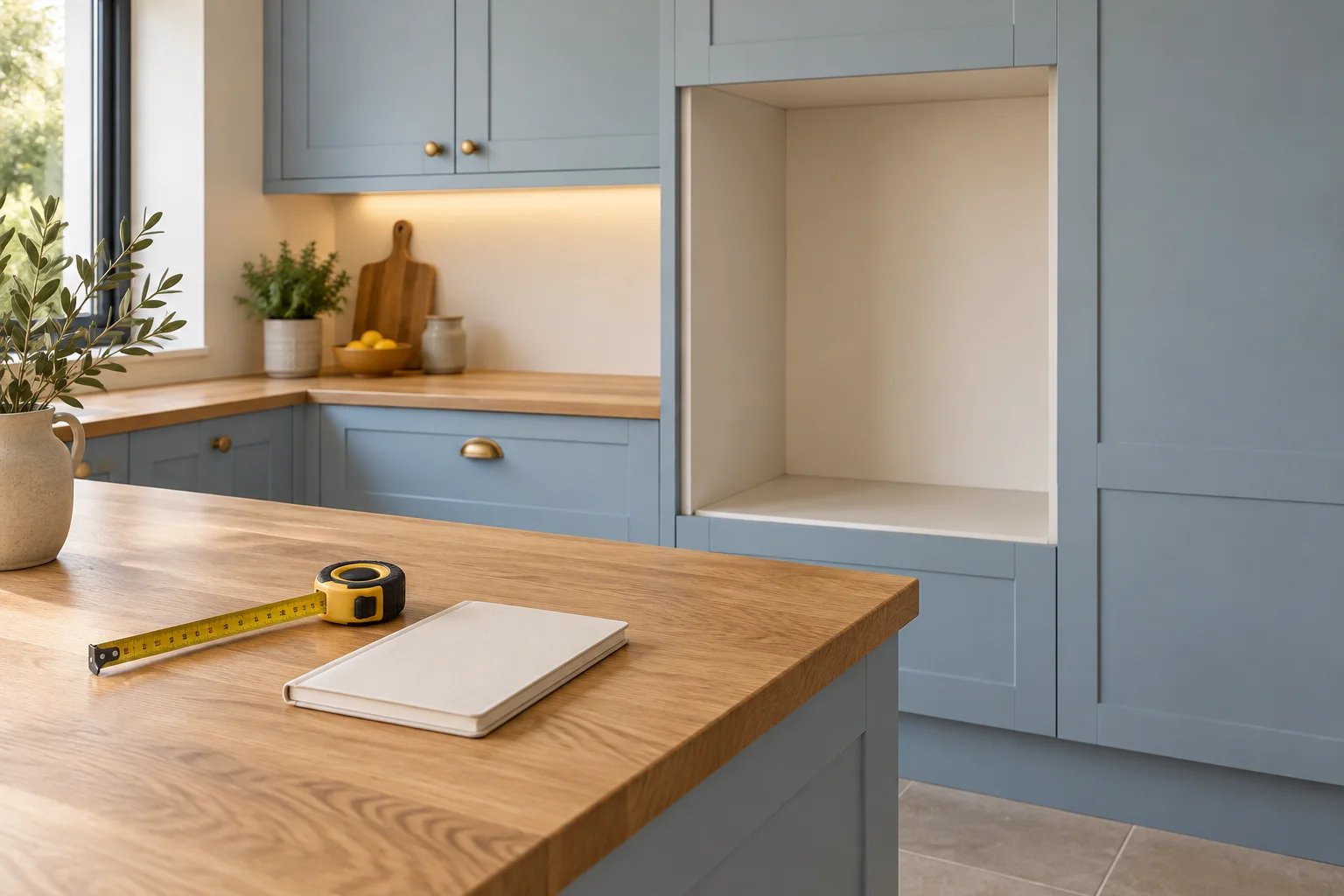
Note the available width, height and depth, then check the exact model's installation instructions. Include door movement, access to drawers or racks and the route into the home. Do not treat the difference between a cabinet width and a product width as an approved ventilation clearance.
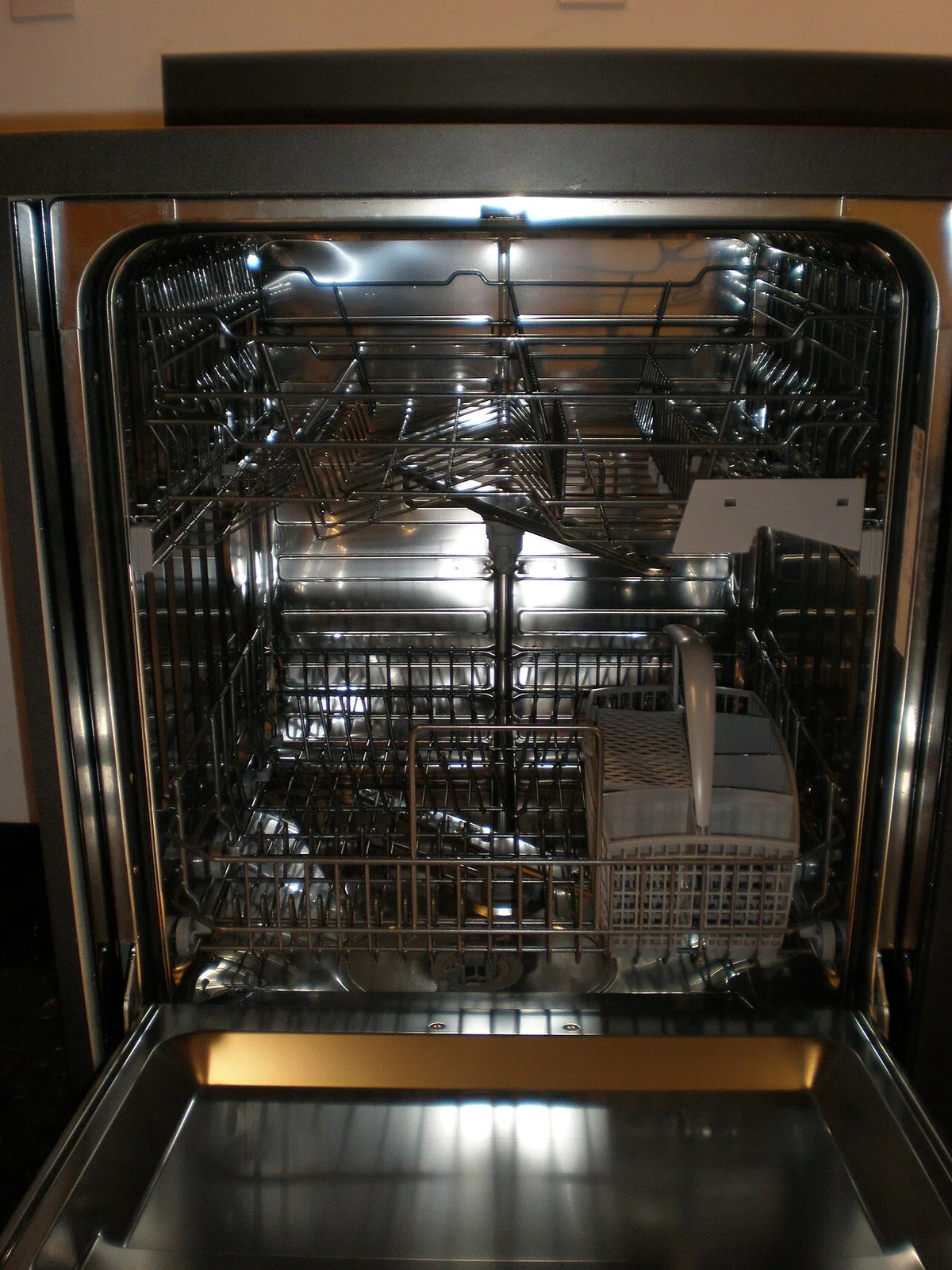
The open dishwasher photograph makes the projecting door and rack arrangement visible. It is a historical example, not a measured installation drawing or a recommendation for a current model. Ask the supplier or installer to resolve any uncertain requirement before ordering, particularly where connections, cabinetry or access would need to change.
Keep consumption units attached to the number
Energy Saving Trust explains that washing-machine label consumption is stated per 100 washes and dishwasher label consumption per 100 eco cycles. A bare number copied into a comparison table can therefore lose the meaning needed to calculate with it. Record the programme basis and unit as well as the value.
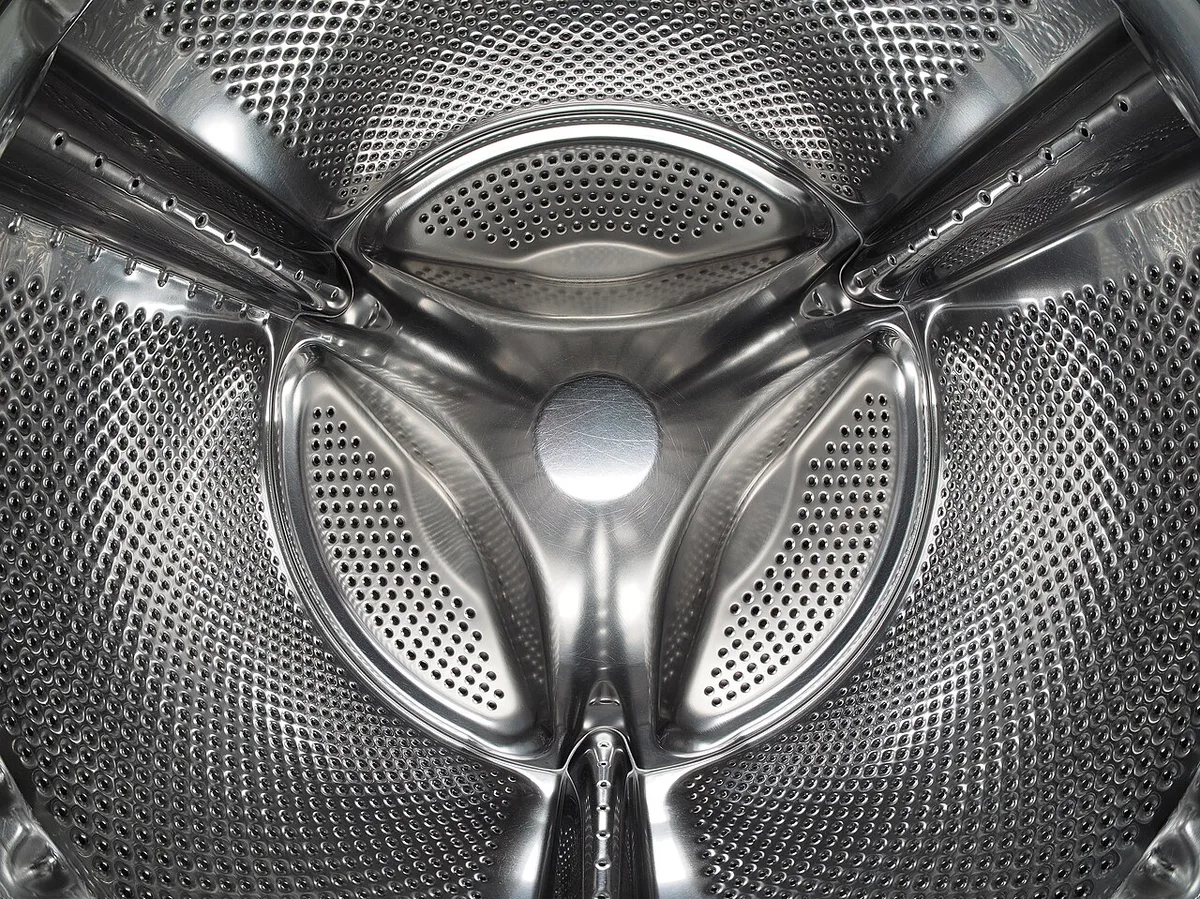
The washing-machine drum photograph illustrates the equipment being discussed, not a measured efficiency result. A label figure is standardised product information, while your actual use can differ. Keep that distinction clear when comparing programmes or estimating costs, and do not assign a current rating to an older appliance from its appearance.
Energy Saving Trust: home appliance labels ?
Use explicit assumptions for the arithmetic
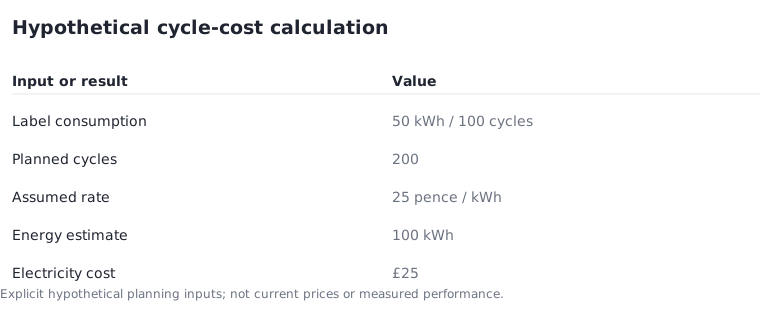
For a hypothetical cycle-based example, take 50 kWh per 100 cycles, 200 planned cycles and an assumed electricity rate of 25 pence per kWh. The resulting estimate is 100 kWh and £25. These are invented inputs, not a current tariff, product specification or promised household saving.
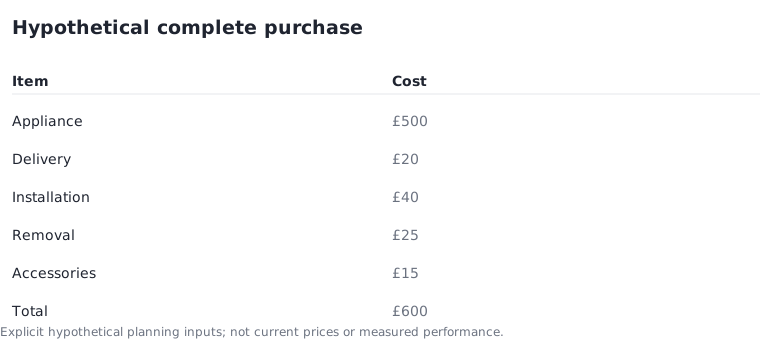
For a separate purchase example, a £500 appliance, £20 delivery, £40 installation, £25 removal and £15 accessories total £600. Keep the two calculations separate: the initial purchase total is not an annual cost. Replace each assumption with the relevant model information, your tariff or a dated quotation before using the result in a decision.
Check the actual label and the complete offer
GOV.UK's current guidance distinguishes Great Britain and Northern Ireland requirements and describes temporary GB options for tumble-dryer labelling. Do not assume that every appliance category uses an identical label format. Open the actual label and product information sheet for the exact model and market you are considering.
Save the seller's package contents and service scope alongside those documents. A lower headline price may exclude a service included elsewhere, while a familiar model name may conceal a different variant. The useful result is a shortlist that explains fit, consumption units and complete costs, with unresolved questions clearly marked before a purchase is made.
GOV.UK: energy information and current tumble dryer labelling ?