Turn an annual fridge energy figure into a cost estimate
Use the stated annual kWh and your own unit rate while keeping the estimate separate from a bill prediction.
Updated:
Find the model information first
GOV.UK explains that regulated appliances are supplied with energy information and a product information sheet. Use the documents for the exact refrigerator model and check that the consumption value you are reading is annual electricity in kWh. Do not copy a nearby wattage value or a figure from a different appliance category.
Keep the source, model and date with the number. The brand-badge photograph illustrates why a manufacturer name by itself is too broad for a meaningful calculation. A familiar brand can offer many products with different capacities and consumption figures, so the estimate should remain attached to the actual candidate.
GOV.UK: energy information and current tumble dryer labelling ?

Enter your own electricity unit rate
Use the unit rate from the tariff relevant to your household and the period being estimated. The calculator accepts pence per kWh and converts that to pounds. A rate of 25 pence is entered as 25, not 0.25; entering pounds into a pence field would change the result by a factor of one hundred.
The rate used in the examples here is hypothetical, not a current price cap or a recommendation of any tariff. If the rate changes during the year, a single-rate calculation is a simplification. Keep standing charges separate rather than assigning the entire household charge to one appliance.
Show the calculation in two steps
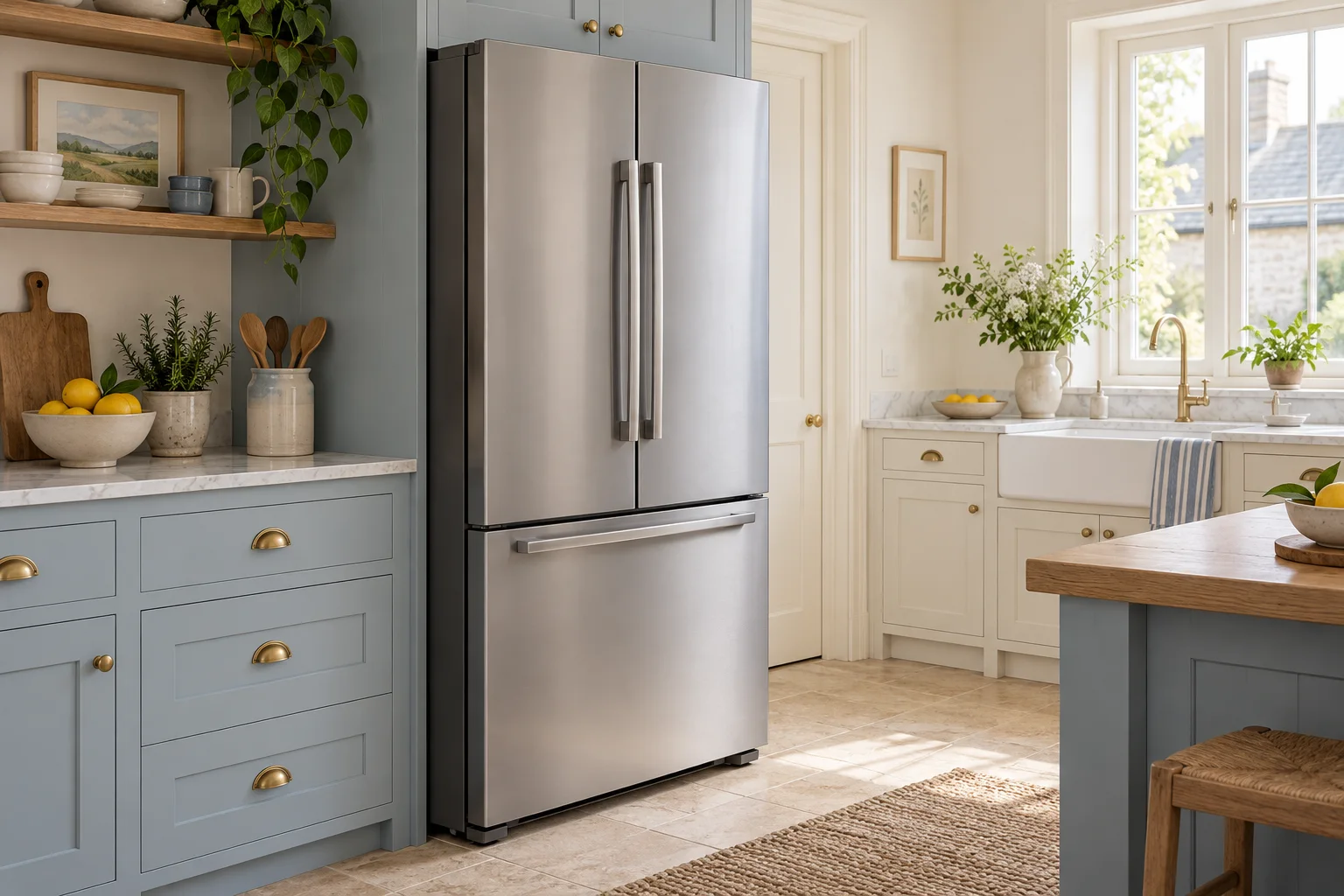
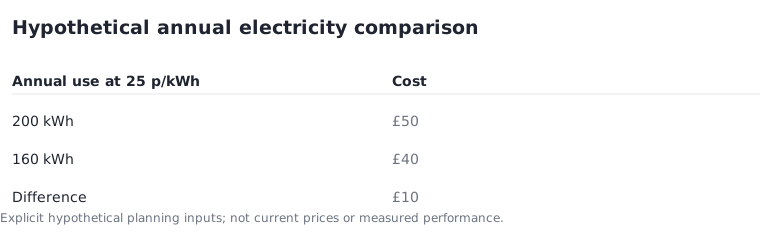
Assume annual consumption of 200 kWh and a rate of 25 pence per kWh. First multiply 200 by 25 to obtain 5,000 pence. Divide by 100 to obtain £50 for the annual electricity estimate. Those are invented inputs, not a specification for the photographed refrigerator or a measured result.
For a second assumed annual figure of 160 kWh at the same rate, the estimate is £40. The difference is £10 a year under these assumptions. It is an arithmetic comparison of stated inputs, not proof that a replacement will save that amount in your home or repay its purchase price.
Keep size and layout beside the result
Energy Saving Trust advises considering the appliance size needed alongside its efficiency information. Compare products that suit the intended storage routine rather than choosing solely by the lowest calculated number. The compartment balance and internal arrangement can still make an otherwise attractive option unsuitable.
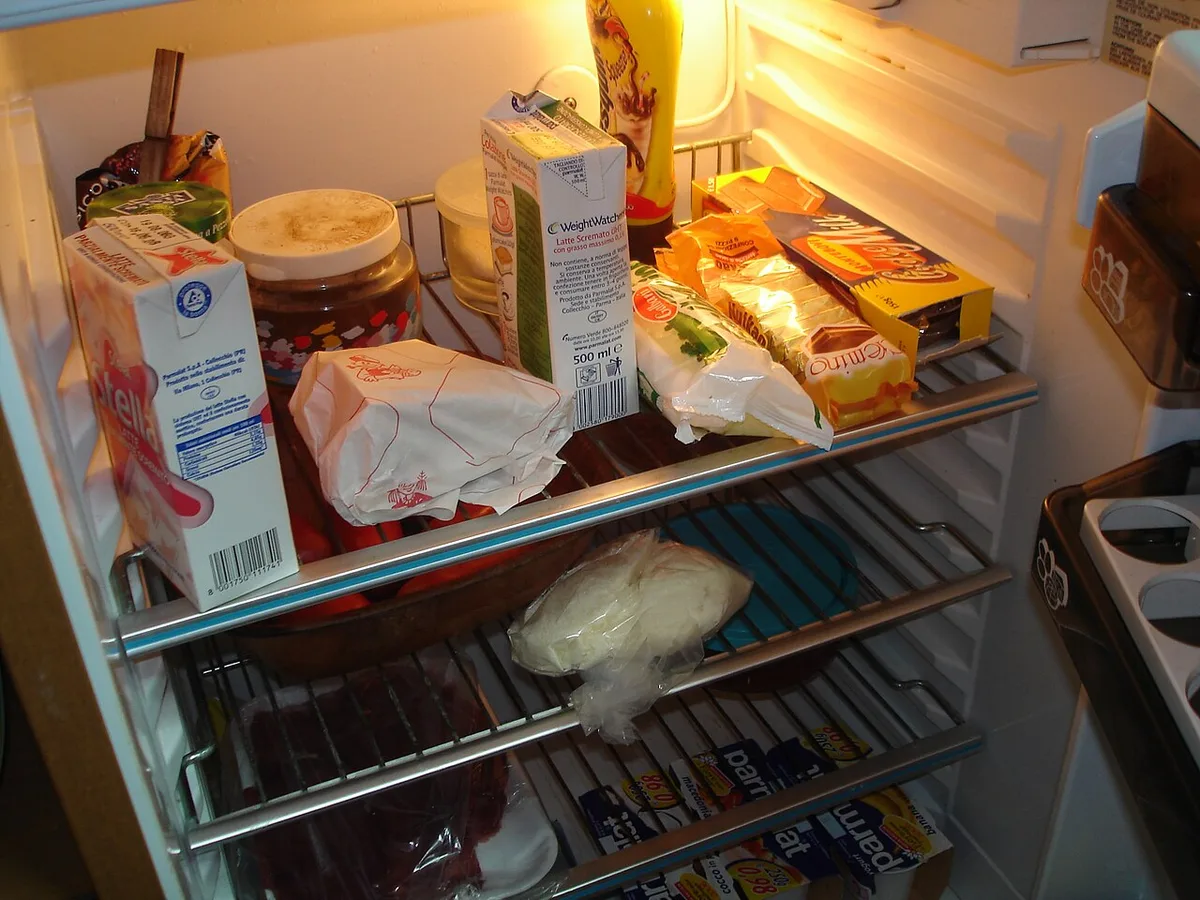
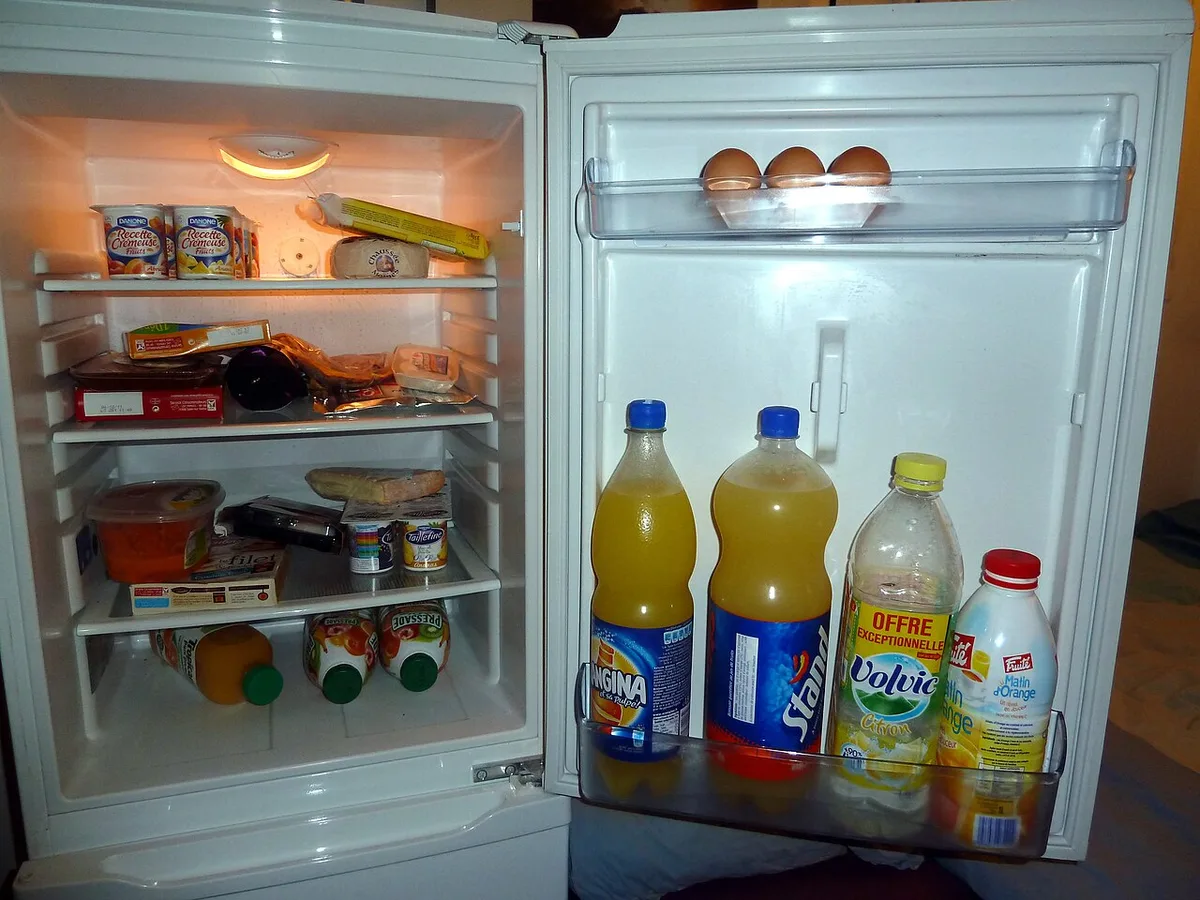
The two historical interior photographs show different shelf and door arrangements. They are included to keep the storage decision visible alongside the calculation, not to rank either appliance's efficiency or food-storage practice. A photograph cannot provide a current energy rating, and no consumption figure in this guide has been measured from those examples.
Energy Saving Trust: home appliance labels ?
Label the estimate and revisit its inputs
Save the model's annual figure, the assumed tariff and the calculation date. If you later compare the estimate with household electricity use, remember that a whole-home bill includes other appliances and activities. Do not attribute a change in the total bill to the fridge without suitable evidence.
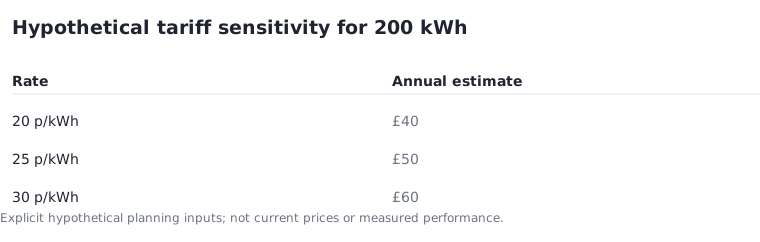
For a simple sensitivity check, the same assumed 200 kWh would cost £40 at 20 pence or £60 at 30 pence per kWh. This range shows how the rate affects the arithmetic, not a forecast of future prices. Update the inputs when the tariff or shortlisted model changes, and keep purchase costs separate.