Use tariff scenarios without pretending to forecast prices
See how an assumed unit rate changes an appliance estimate while keeping usage constant.
Updated:

Fix the consumption basis first
Energy Saving Trust describes the programme and consumption information on appliance labels, including per-100-cycle figures for washing machines and dishwashers. Before changing a tariff assumption, make sure the energy quantity already represents the period or number of cycles you intend to examine.
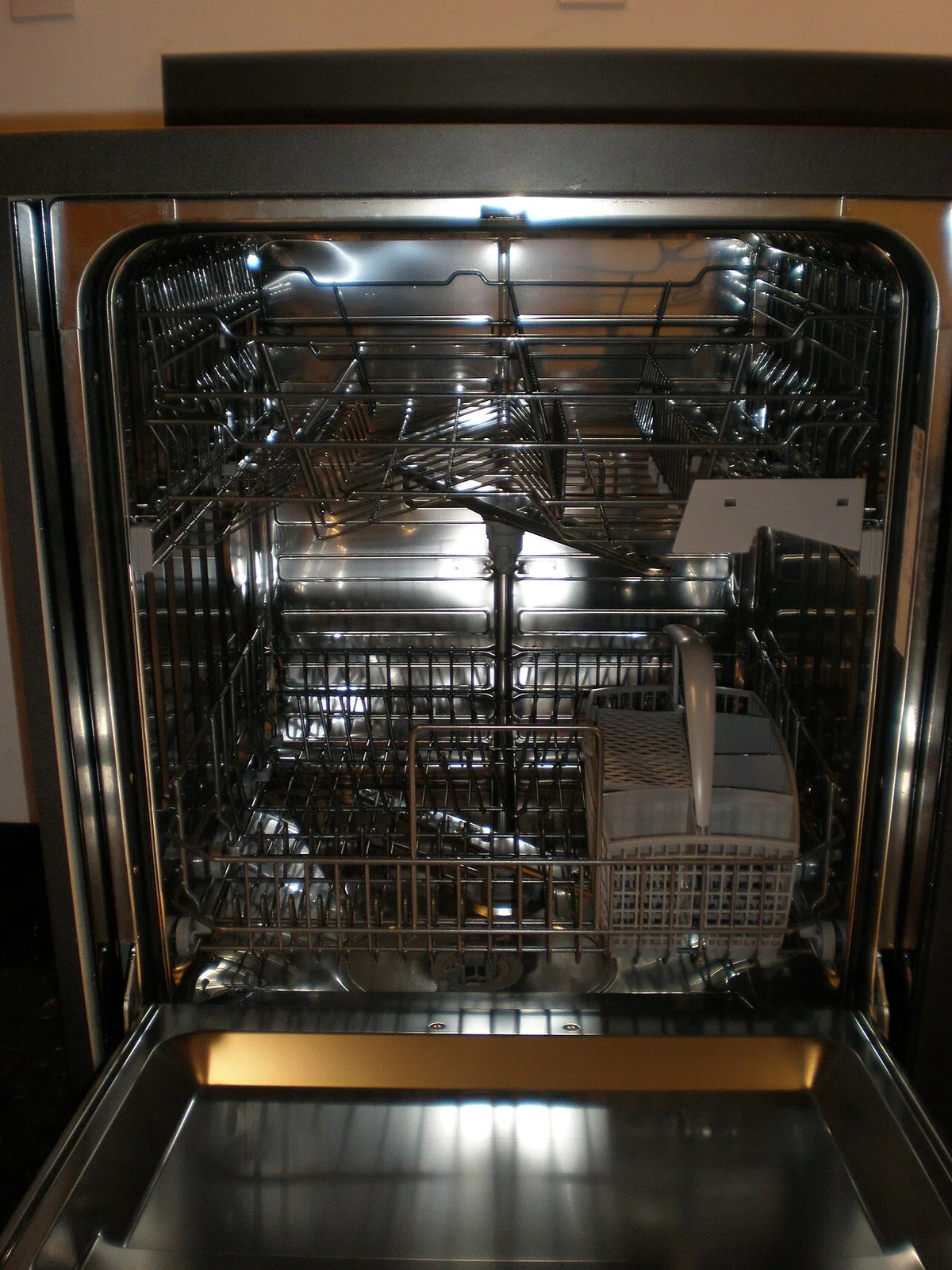
Otherwise, a table may look precise while comparing different amounts of use. Record the exact model, original unit and any conversion. The historical appliance photographs in this guide are context for the kinds of equipment involved; they do not provide the consumption values used in the examples.
Vary one input at a time
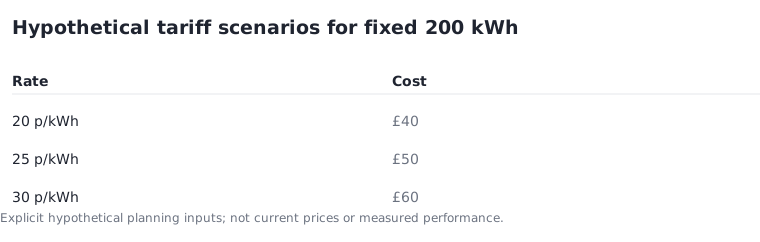
Assume a fixed 200 kWh electricity quantity for a chosen period. At 20 pence per kWh the cost is £40; at 25 pence it is £50; at 30 pence it is £60. These invented rates are scenarios, not current tariffs or forecasts. Holding consumption constant makes the effect of the rate visible.
The £20 difference between the first and last result comes entirely from the assumed tariff change. It does not mean the appliance has become more or less efficient. Keep the scenario labels explicit so a reader does not mistake the lowest number for a price available to every household.
Use your own tariff information for decisions
Check the unit rate relevant to your account and the period being considered. The calculator fields on this site use pence per kWh, so a rate stated in pounds needs to be converted before entry. For example, £0.25 per kWh is 25 pence per kWh, not 0.25 pence.
Keep standing charges separate from an appliance-only estimate. Do not allocate the full household standing charge to each machine and then add the results together. If a decision depends on a tariff with different rates at different times, a single-rate scenario is only a simplification and should be labelled accordingly.
Keep usage changes in a separate comparison
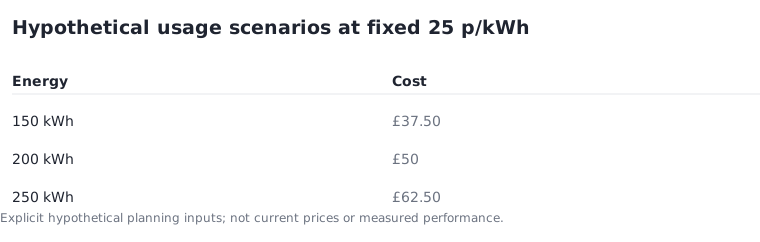
For a second hypothetical exercise, hold the rate at 25 pence and compare 150, 200 and 250 kWh. The costs are £37.50, £50 and £62.50. This table changes the energy quantity rather than the tariff, so it answers a different question from the first one.
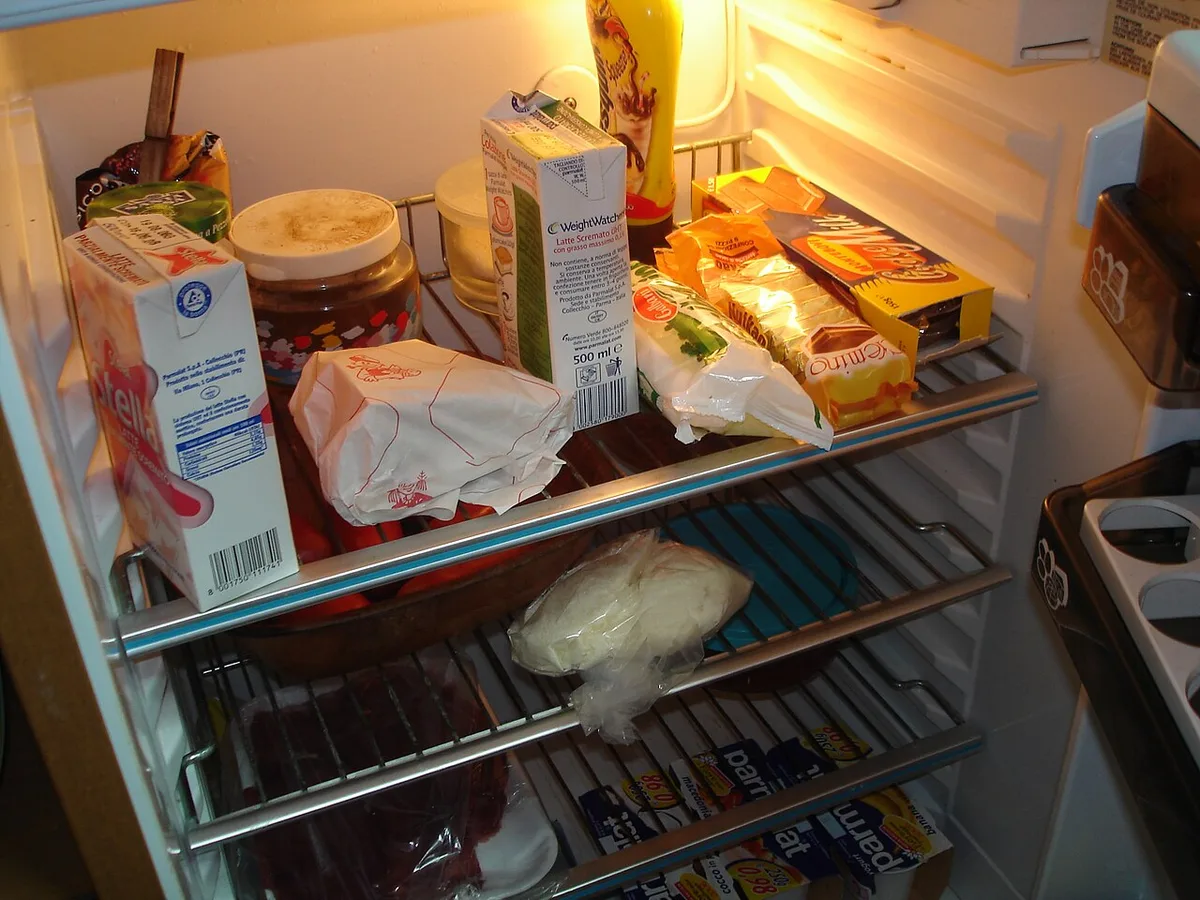
The refrigerator, washer and dishwasher photographs illustrate separate tasks whose use may change for different reasons. They are not evidence of a particular saving. Avoid merging a lower assumed rate and lower assumed consumption into one headline claim without showing both changes and explaining why either would apply to the actual household.
Preserve the evidence behind the estimate
GOV.UK identifies the product information sheet as part of appliance energy information. Save the relevant sheet or other reliable consumption basis with the tariff source and checked date. A scenario table should remain easy to update when one of those inputs changes.
Keep the conclusion narrow: the examples show how multiplication responds to different assumptions. They do not recommend a tariff, forecast the market or establish a replacement payback period. A useful decision record leaves purchase cost, suitability, installation and any unverified consumption difference visible alongside the electricity calculation.
GOV.UK: energy information and current tumble dryer labelling ?