Check dishwasher rack fit before relying on a capacity claim
Compare the shape of your tableware with documented rack adjustments and usable access.
Updated:
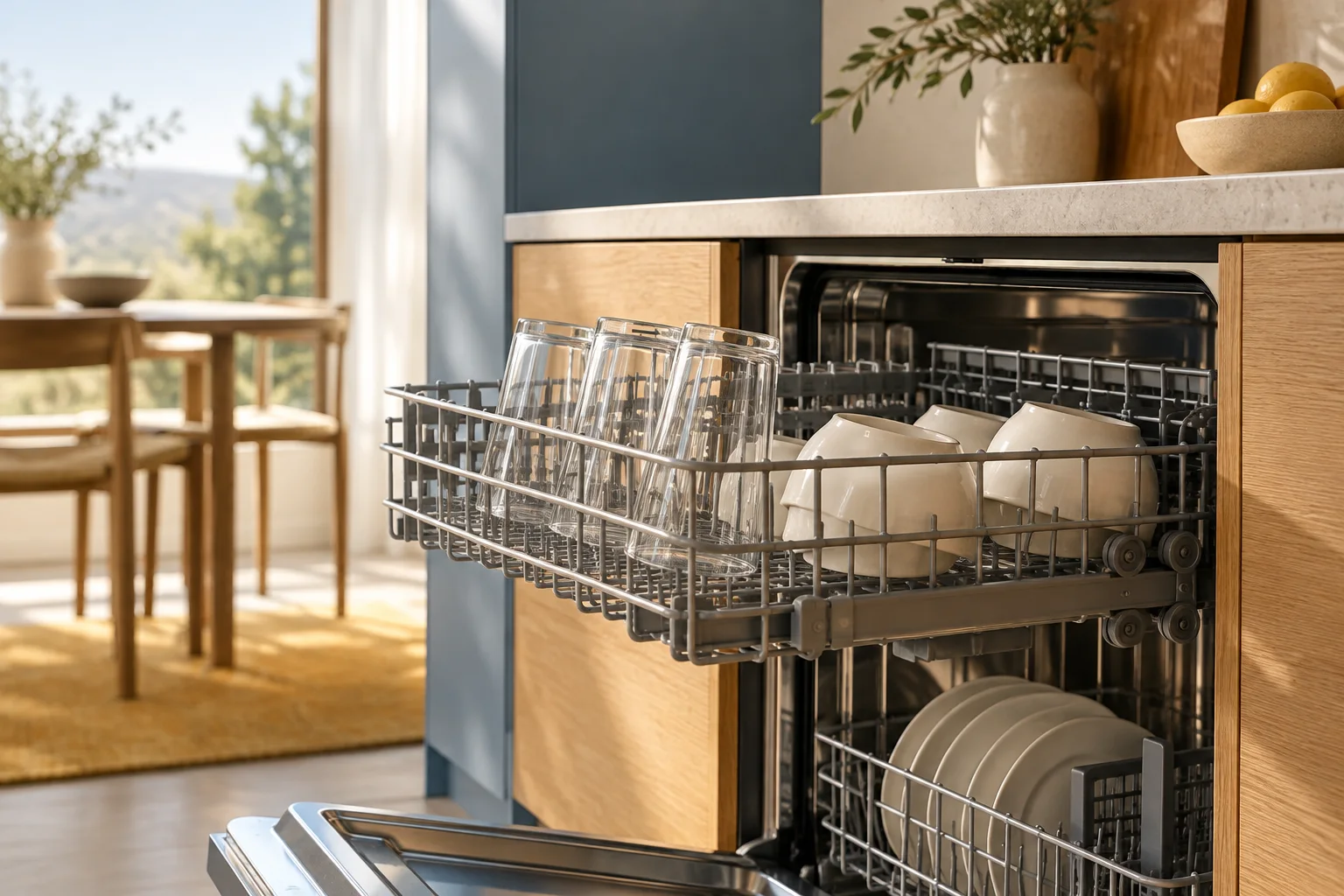
Treat the capacity figure as the beginning
Energy Saving Trust lists capacity as one of the fields on a dishwasher energy label. It is useful for identifying the model's stated scope, but it does not answer every question about a tall glass, wide bowl or large serving plate. Keep those practical questions beside the label rather than replacing them with a larger advertised count.
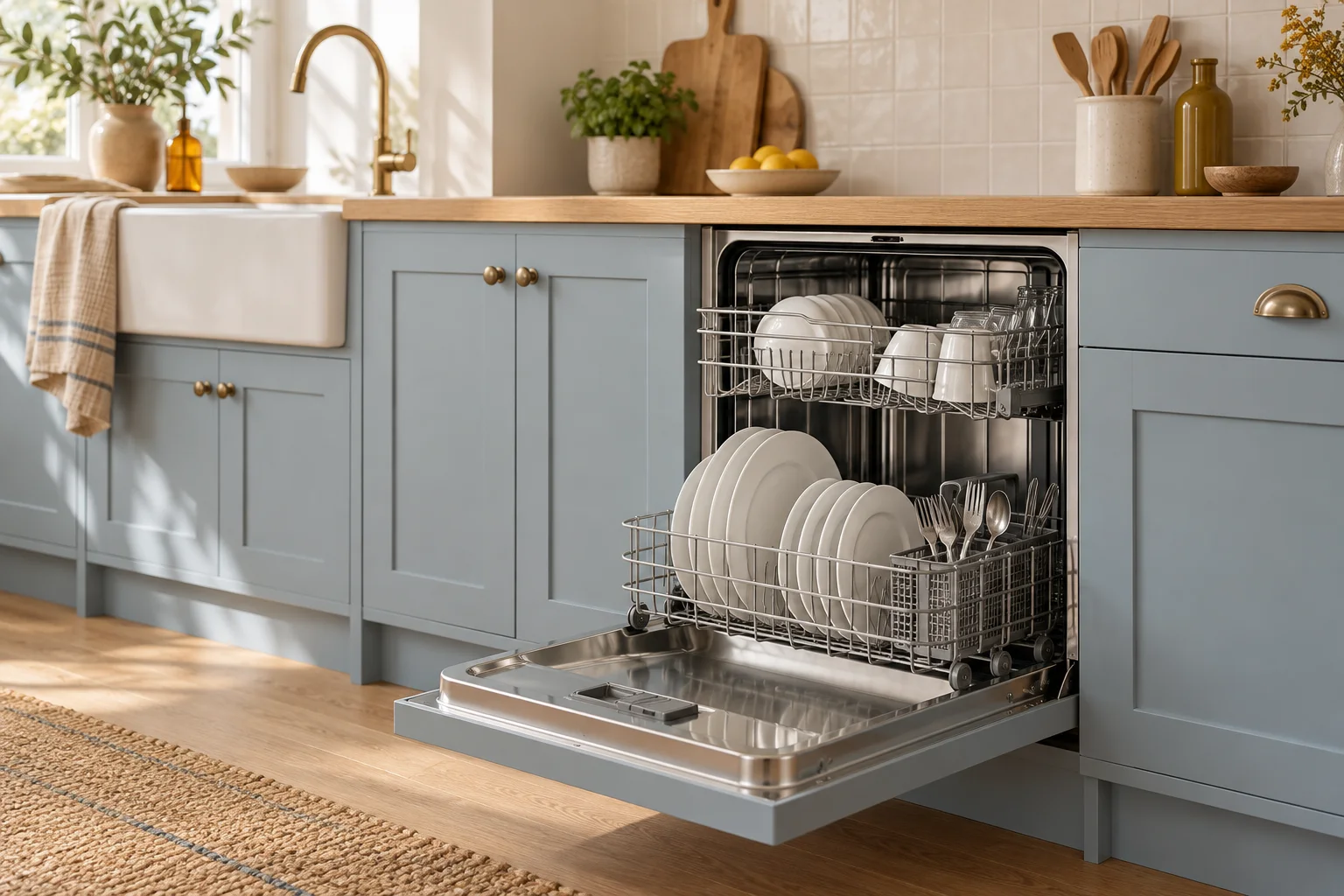
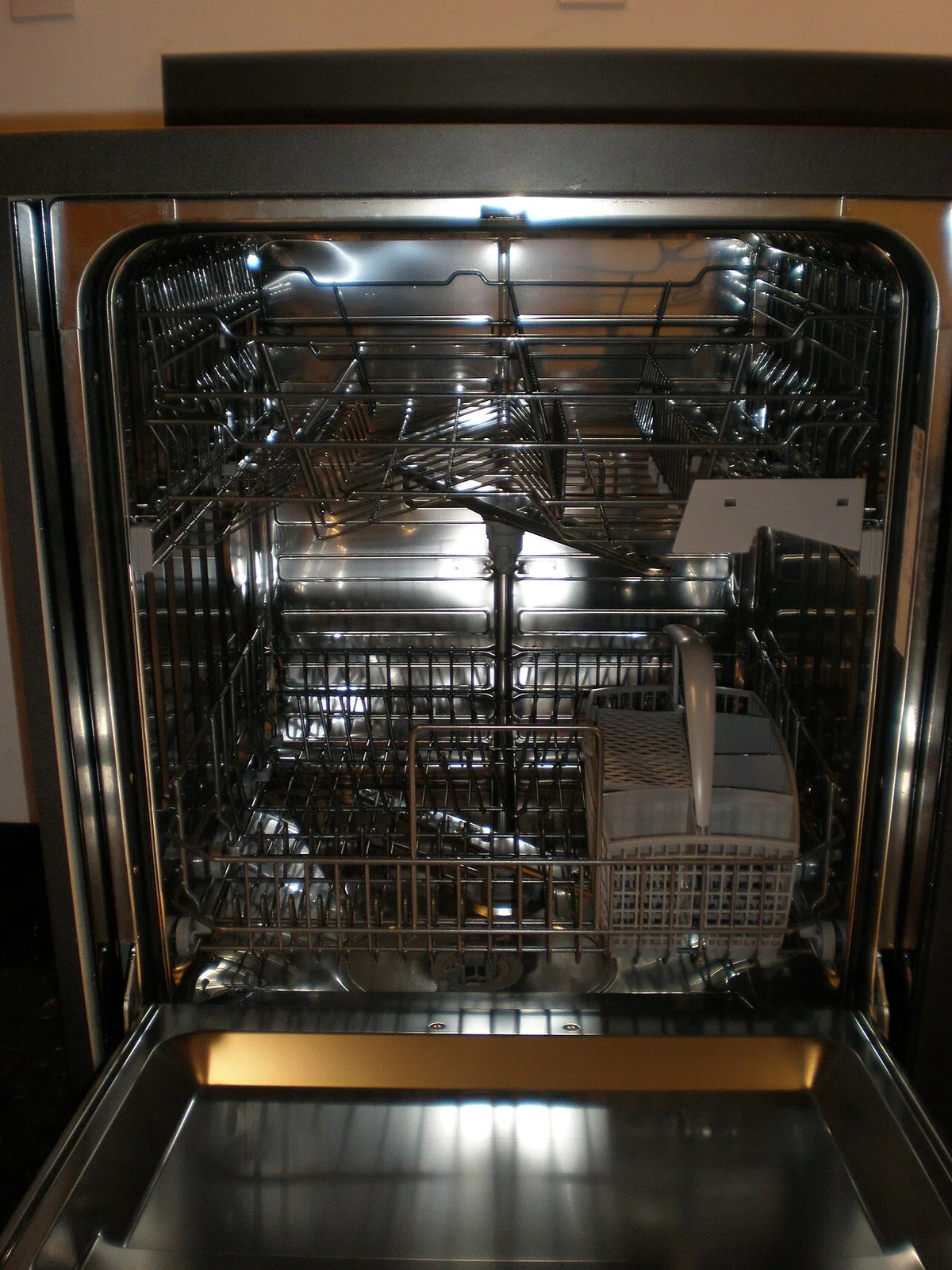
The historical open Asko photograph shows racks and a basket occupying different areas. It demonstrates a layout to inspect, not a measured fit test for your tableware. Use the exact model information and loading guidance when deciding whether an arrangement suits the items you intend to wash.
Energy Saving Trust: home appliance labels ?
Measure the items that create constraints
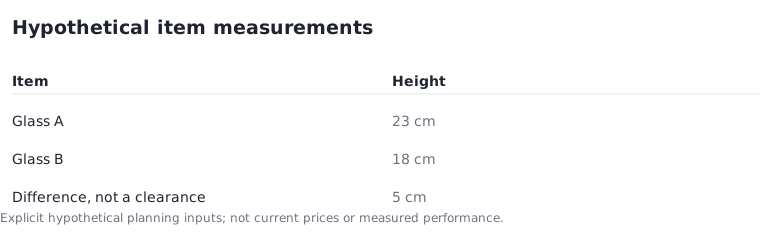
Make a small list of the tallest, widest or most awkward dishwasher-suitable items in your routine. Record their actual dimensions and any care restrictions. Do not assume that an item shown in a promotional photograph has the same dimensions as your own or that every material can be washed in the machine.
For an assumed example, a glass 23 centimetres tall needs to be considered differently from one 18 centimetres tall: the difference is 5 centimetres. That subtraction does not establish a required clearance or guarantee fit. The relevant rack position and manufacturer guidance still need to be checked for the actual item.
Verify adjustments rather than guessing
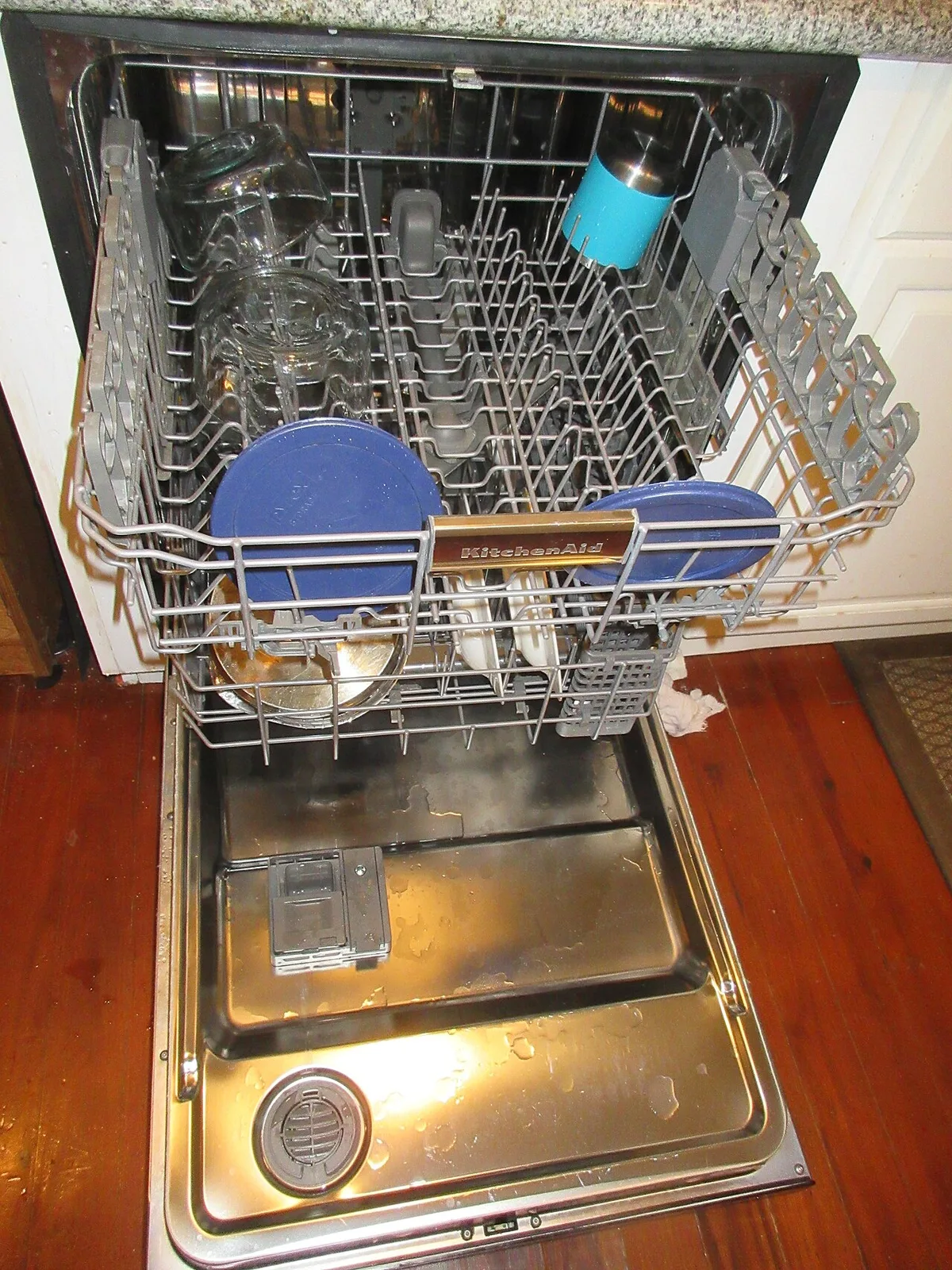
The KitchenAid photograph shows an extended upper rack with cups and small dishes. A visible support or moving-looking component does not prove that it is adjustable, removable or intended to be used in a different position. Check the model manual for permitted adjustments and the consequences for the other rack.
Keep a separate note of any fit question that remains unanswered. If a supplier demonstrates an adjustment, ask which exact model and configuration it applies to. Do not transfer that answer to another variant simply because the front panel or brand name looks similar, and do not force components to create room.
Include the space outside the machine
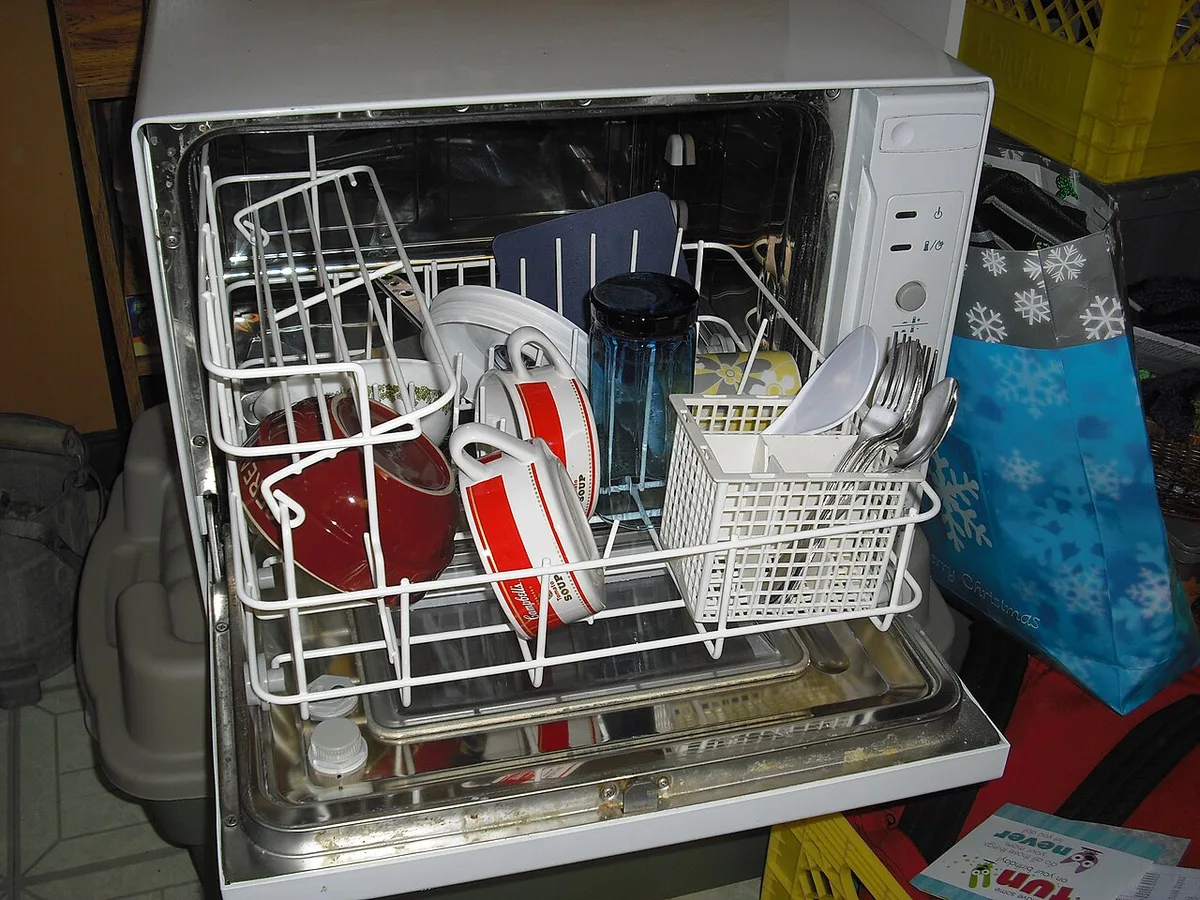
The countertop dishwasher photograph makes the forward movement of a loading area visible in a different format. It is historical context, not an installation recommendation. Consider the door opening, rack extension and usable access in the intended kitchen alongside the internal item-fit question.
For a hypothetical planning sketch, an assumed 60-centimetre door projection and 50-centimetre standing allowance add to 110 centimetres. Those figures are invented and are not a universal access specification. Use the actual drawing and the needs of the person using the appliance; the arithmetic alone cannot certify that a layout is suitable.
Save a focused set of questions
GOV.UK identifies the product information sheet as part of the appliance's energy information. Keep it with the installation drawing, loading instructions and your short item list. The resulting record should distinguish what is documented from what is only assumed or still needs a supplier answer.
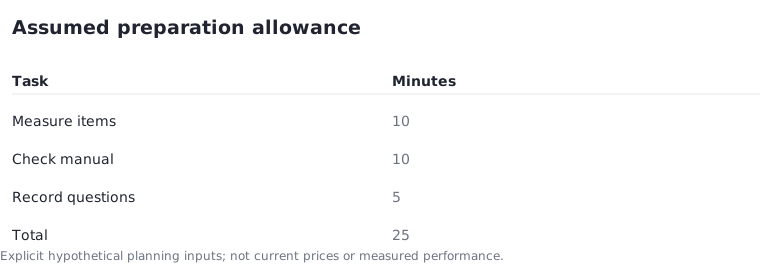
An illustrative 10 minutes measuring items, 10 checking the manual and 5 recording questions totals 25 minutes of preparation. That is a planning allowance, not a promise that all fit issues can be resolved in that time. A careful shortlist explains the remaining uncertainties instead of converting an attractive rack photograph into a claim that everything will fit.
GOV.UK: energy information and current tumble dryer labelling ?