Check which tumble-dryer label you are comparing in Great Britain
Read the current GB label options and preserve the unit and programme basis in your comparison.
Updated:
Check the market and the current guidance
GOV.UK's guidance, updated on 8 April 2026 and checked for this article on 27 October 2026, distinguishes tumble-dryer labelling in Great Britain from Northern Ireland and the EU. It says GB suppliers may use the current GB label and fiche or a temporary easement label with its corresponding product information sheet.
That makes a blanket statement that every dryer now has the same new label unreliable. Open the actual documents for the exact model and market. This article explains a buying comparison, not a compliance assessment for suppliers, and the official guidance should be checked again if the rules or timing changes.
GOV.UK: energy information and current tumble dryer labelling ?
Keep the label and information sheet together
The DESNZ easement document provides the associated product-information formats. Read the model identifier and the stated measurement basis rather than comparing letter grades detached from their label scheme. A rescaling is not evidence that the physical appliance has suddenly changed its energy use.
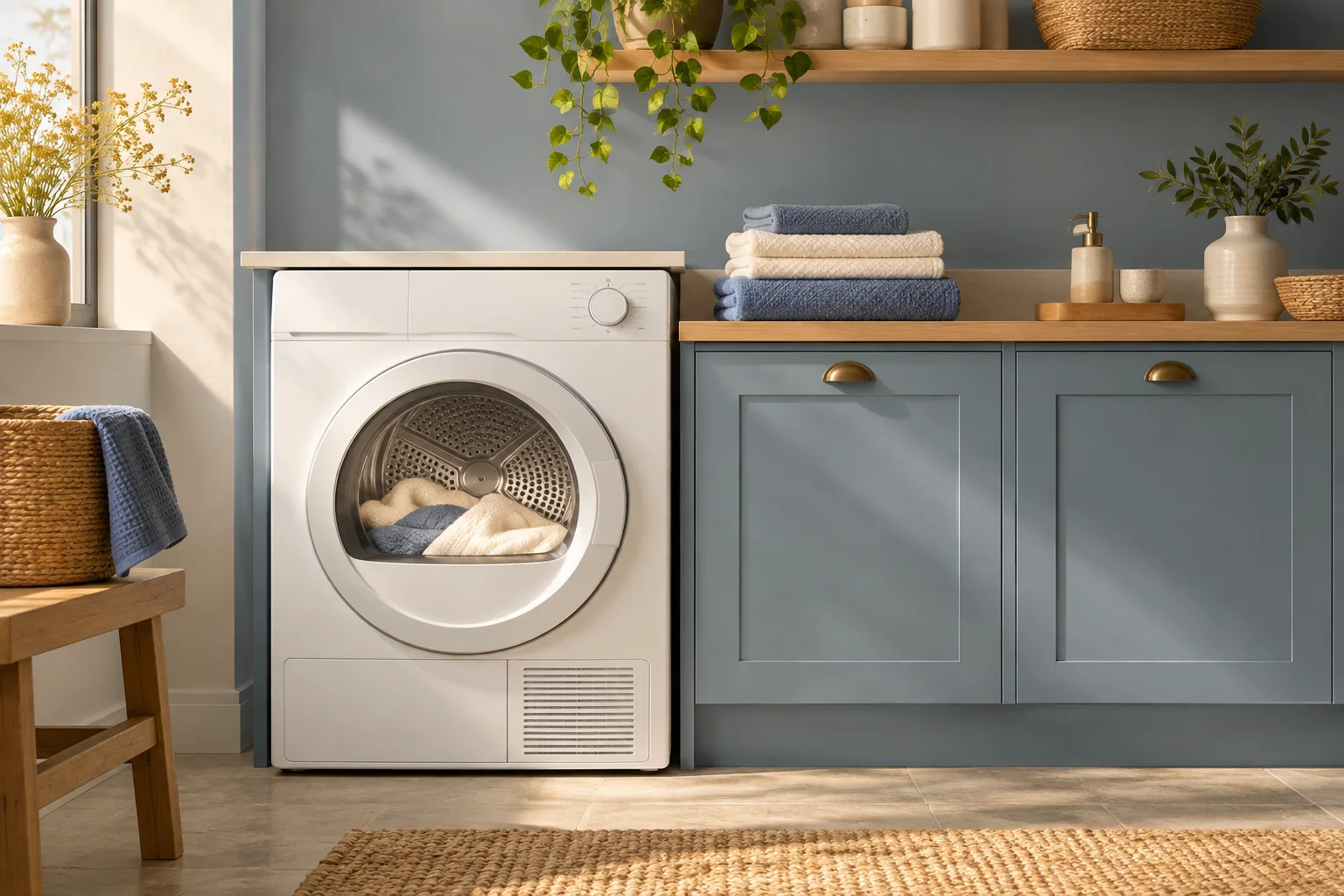
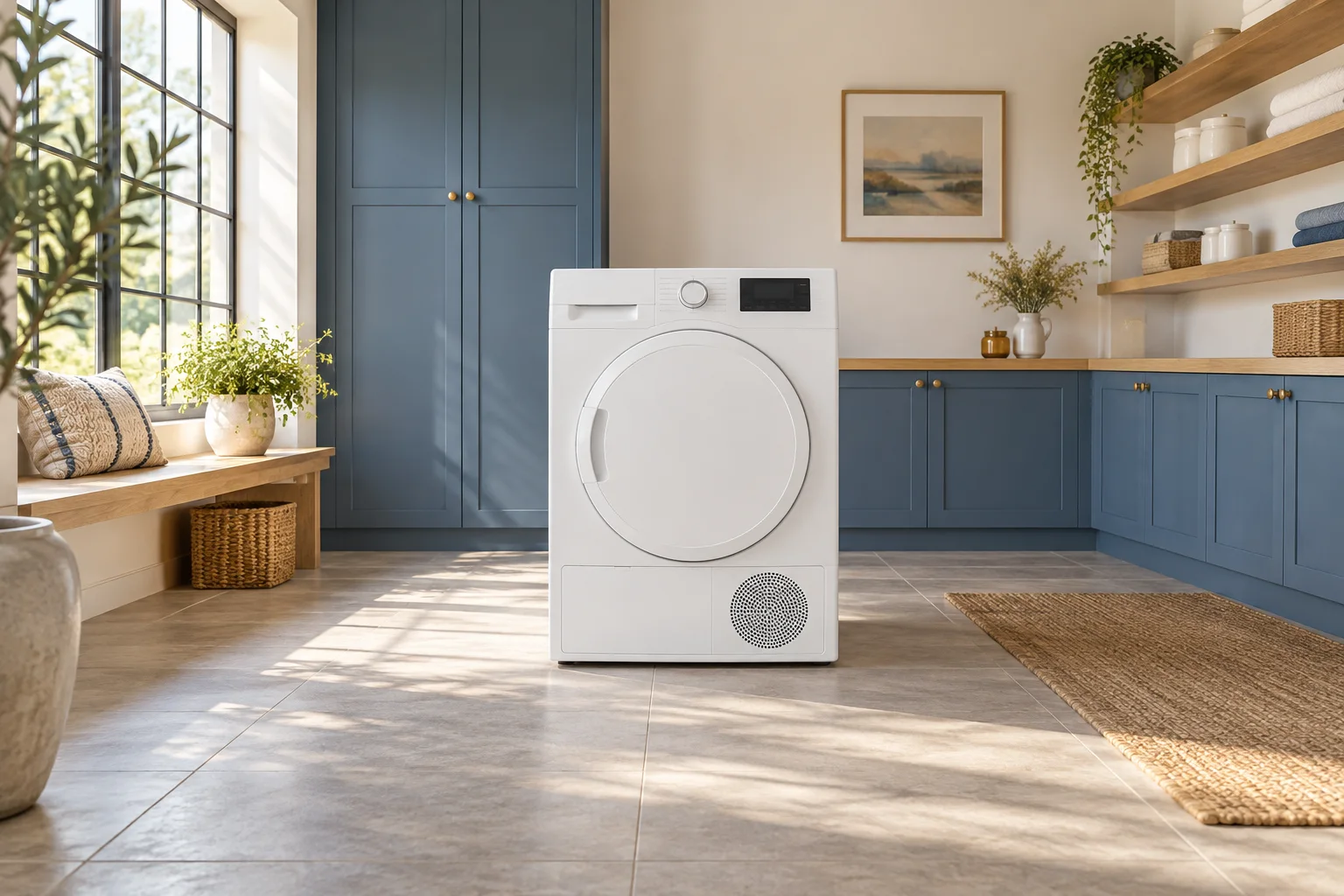
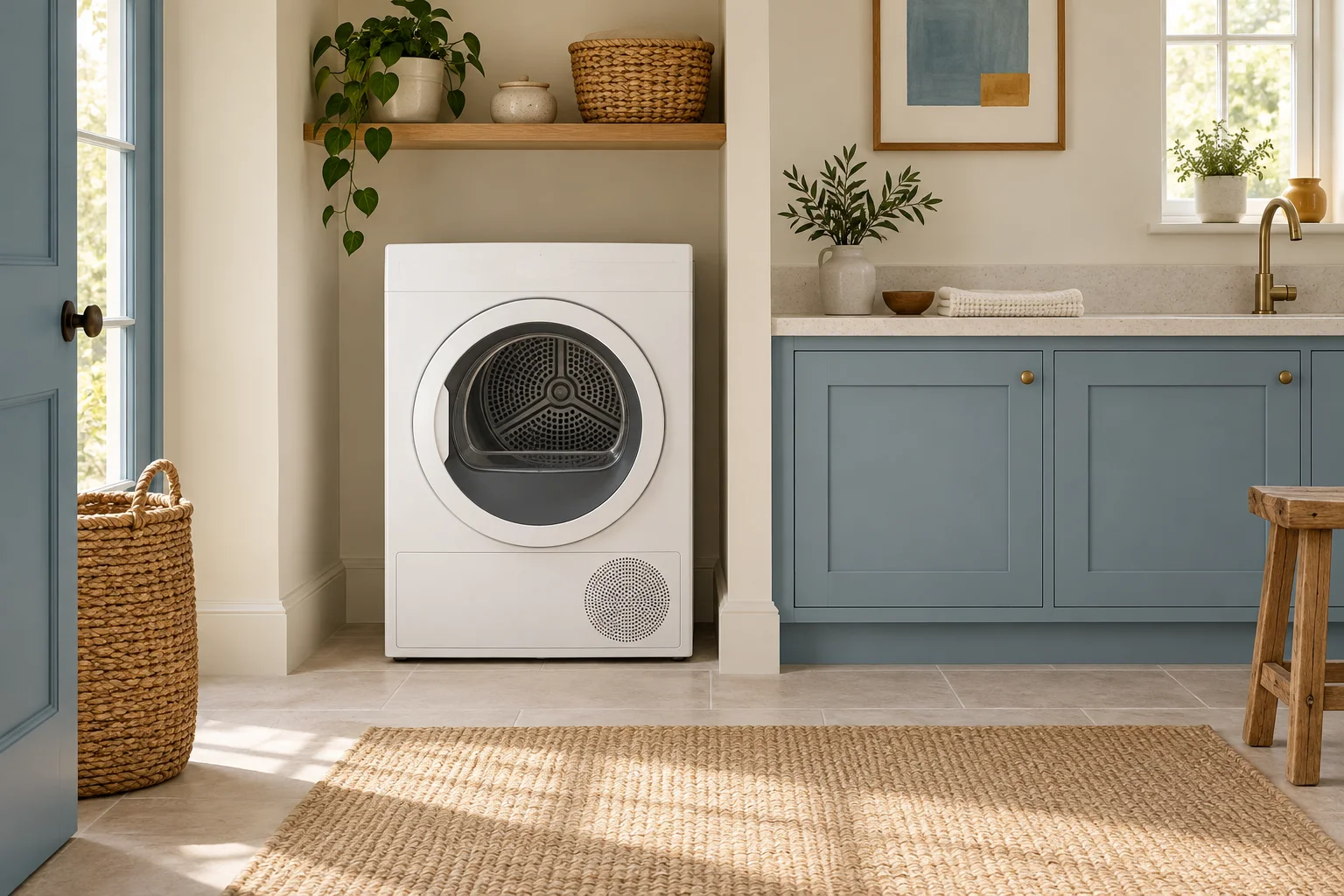
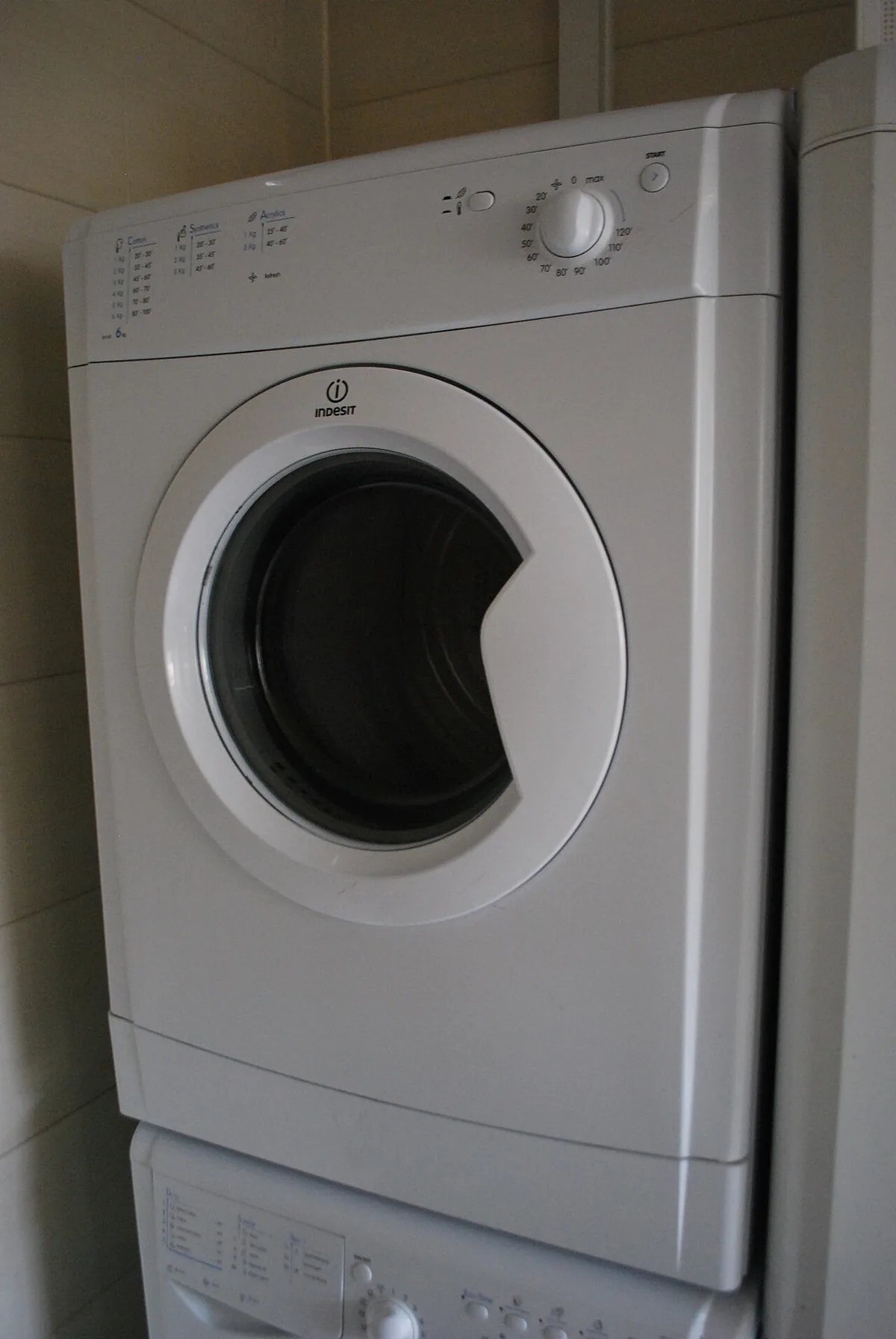
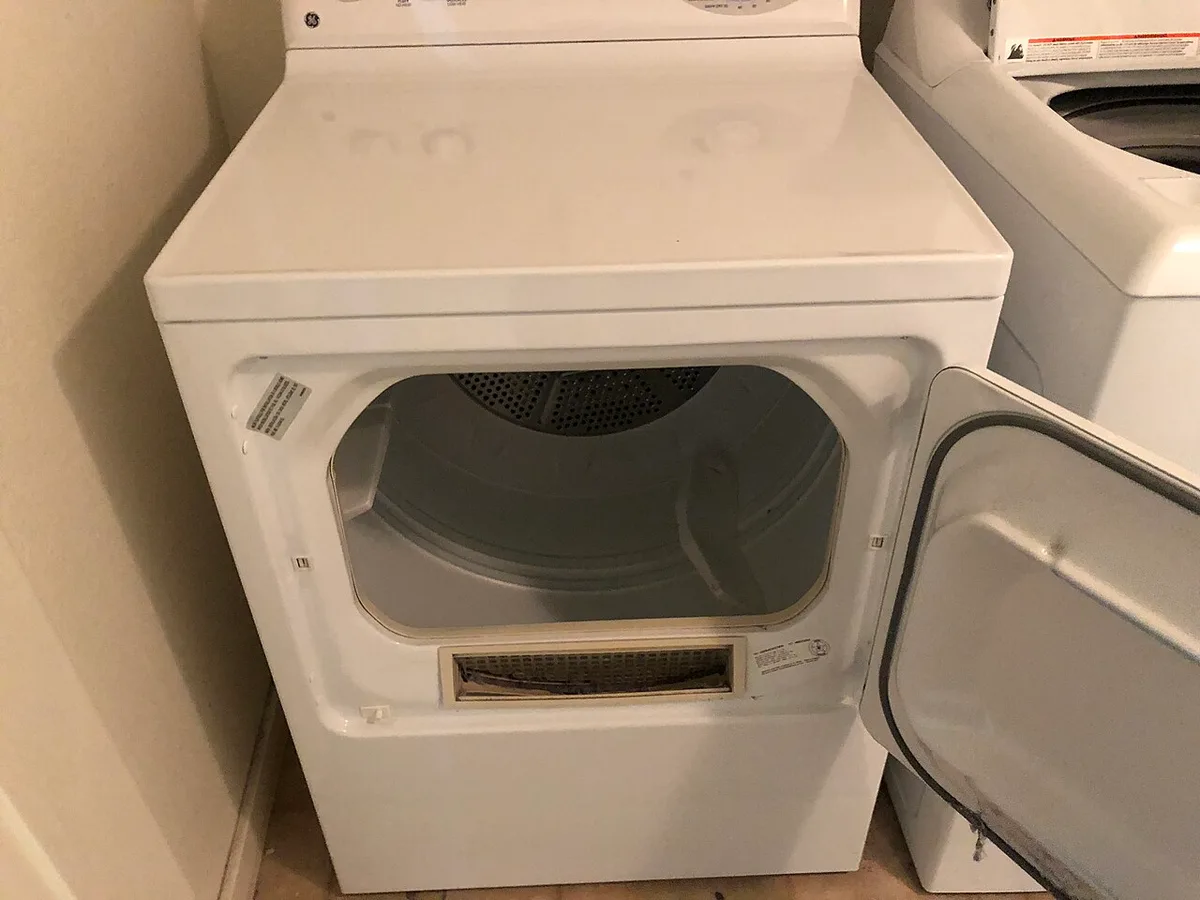
The two historical dryer photographs illustrate different machines and door arrangements. Neither photograph supplies a current UK label, and no rating is assigned to them here. Use the actual seller or manufacturer documents for a current shortlist rather than trying to infer efficiency from age, colour, control style or the shape of the door.
DESNZ: 2026 tumble dryer label easement and product information sheets ?
Notice whether the number is per cycle or another basis
The easement product sheet includes weighted energy consumption in kWh per drying cycle and notes that actual consumption depends on use. Preserve that unit when copying the value. Do not paste a per-cycle value into a calculator field asking for kWh per 100 cycles without performing and recording the conversion.
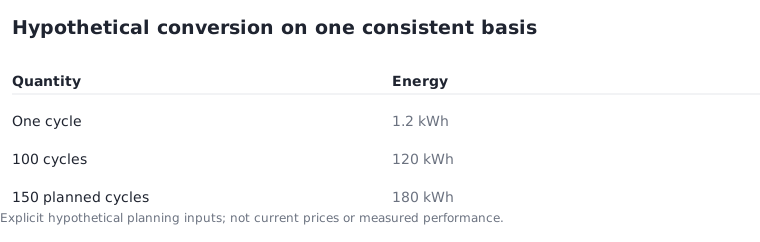
As an invented arithmetic example, 1.2 kWh per cycle is equivalent to 120 kWh for 100 cycles on the same assumed basis. Over 150 planned cycles, the calculation gives 180 kWh. These are hypothetical inputs, not values read from the pictured machines or a prediction of any household's drying routine.
DESNZ: 2026 tumble dryer label easement and product information sheets ?
Keep washing and drying scope distinct
Energy Saving Trust explains that washer-dryer labels separate wash-only and wash-and-dry information. A standalone dryer's drying figure should not be compared directly with a combined washing-and-drying figure as though the tasks were identical. Write down what each number includes before calculating a difference.
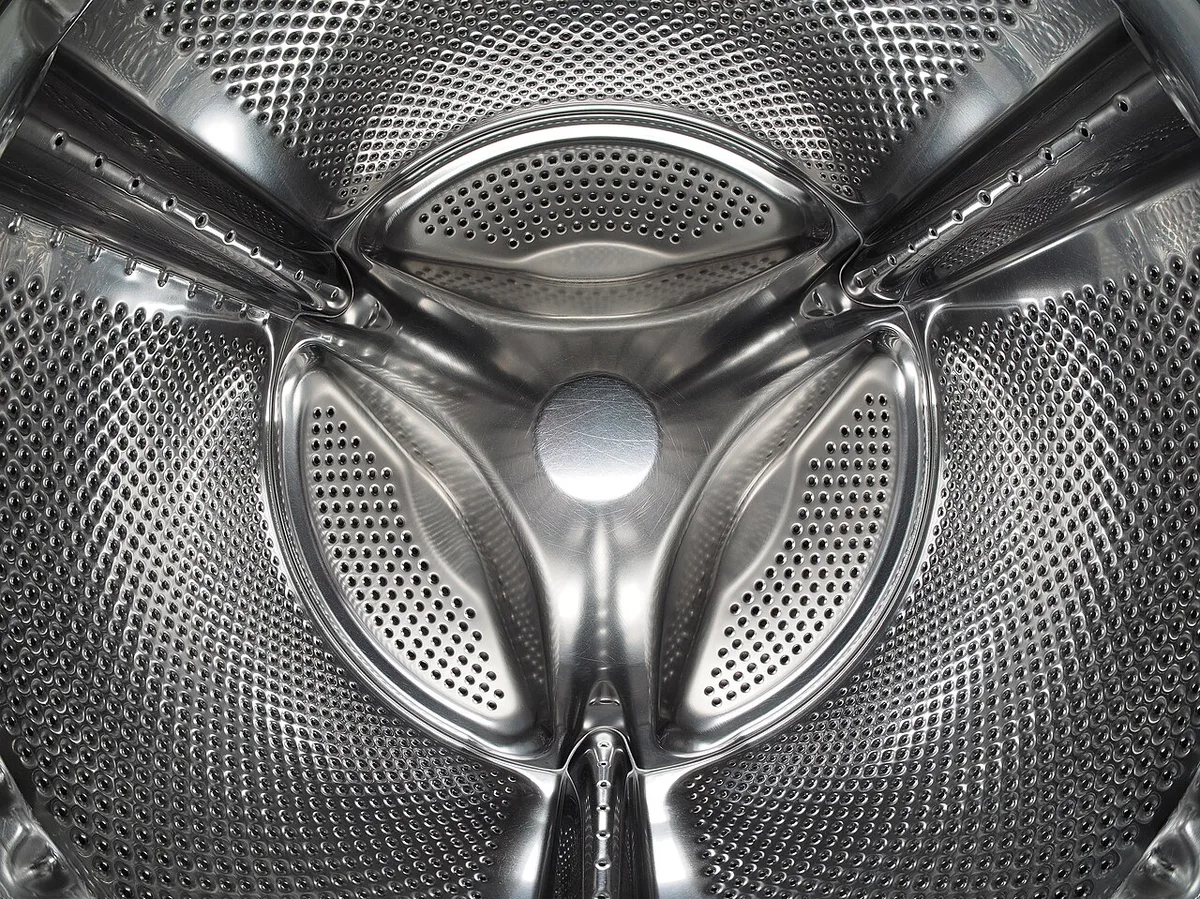
The washing-machine drum photograph is included to make that distinction visible. It is washing equipment context, not a dryer efficiency image. If you are comparing a separate washer and dryer with a combination appliance, define the same intended sequence and obtain the relevant information for all parts rather than choosing the smallest isolated number.
Energy Saving Trust: home appliance labels ?
Use the tariff only after the basis is clear
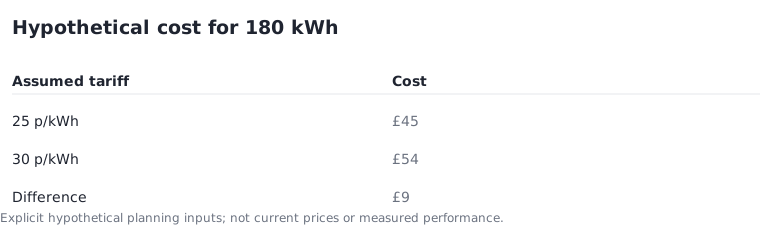
Using the hypothetical 180 kWh total and an assumed 25 pence per kWh gives £45. At 30 pence it would be £54, a £9 difference caused solely by the assumed tariff. Neither rate is presented as current, and the figures exclude purchase costs and household standing charges.
Save the checked date, model documents, consumption basis and tariff assumption with the estimate. If a listing changes its label presentation, verify the corresponding sheet rather than merging old and new fields. The useful comparison keeps the measurement basis visible and leaves room for real-use differences instead of promising savings from a letter grade alone.