Prepare a laundry installation record before ordering
Keep dimensions, access, connections and the agreed service scope in one place.
Updated:
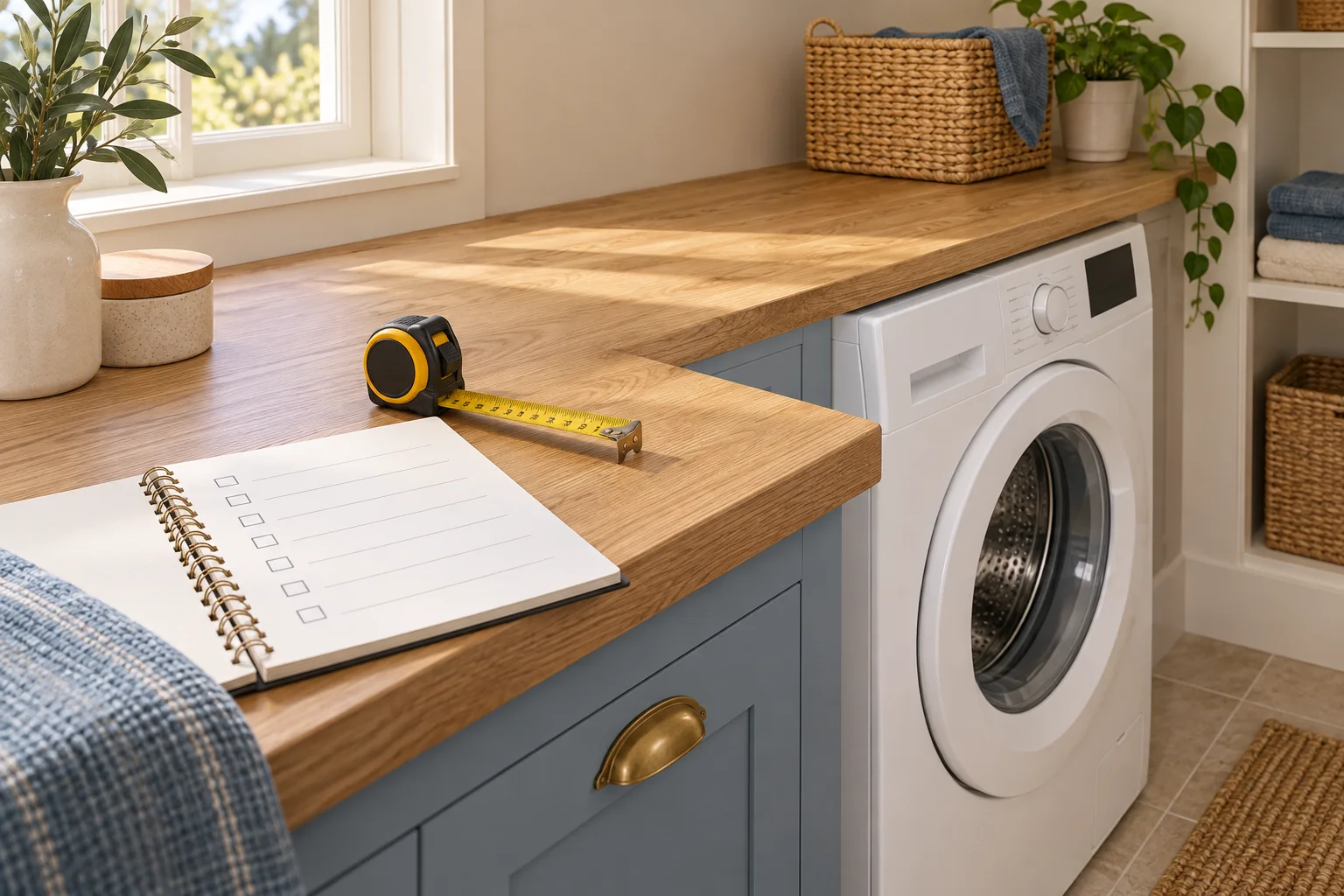
Identify the appliance precisely
GOV.UK's energy-information guidance describes the model's product information sheet as part of the information supplied with regulated appliances. Save that sheet alongside the separate installation manual and drawing. A capacity or energy label is useful product information, but it is not a complete connection or installation procedure.
Record the full model reference and the intended location. If a shortlist changes to a similar variant, check the documents again instead of assuming the installation details remain identical. This guide is a preparation record for discussing the work with the supplier or installer, not a set of instructions for plumbing or electrical work.
GOV.UK: energy information and current tumble dryer labelling ?
Measure the space and the opening movement
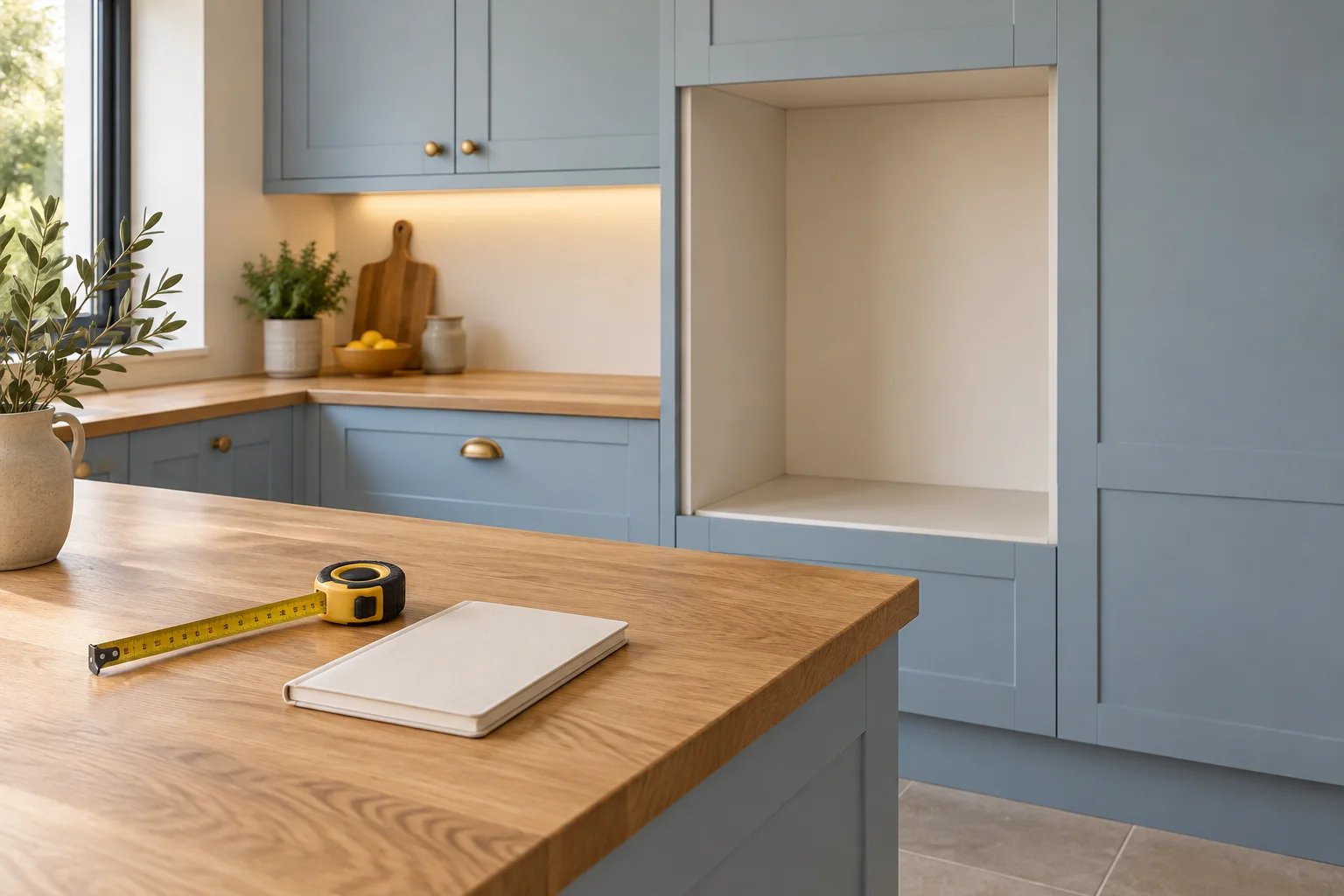
Record width, height and depth at the actual location, including fixed obstructions. Keep the manufacturer's required space separate from the appliance's external dimensions. Check the intended opening arrangement and the practical space for loading, without inventing a standard clearance that supposedly suits every machine.
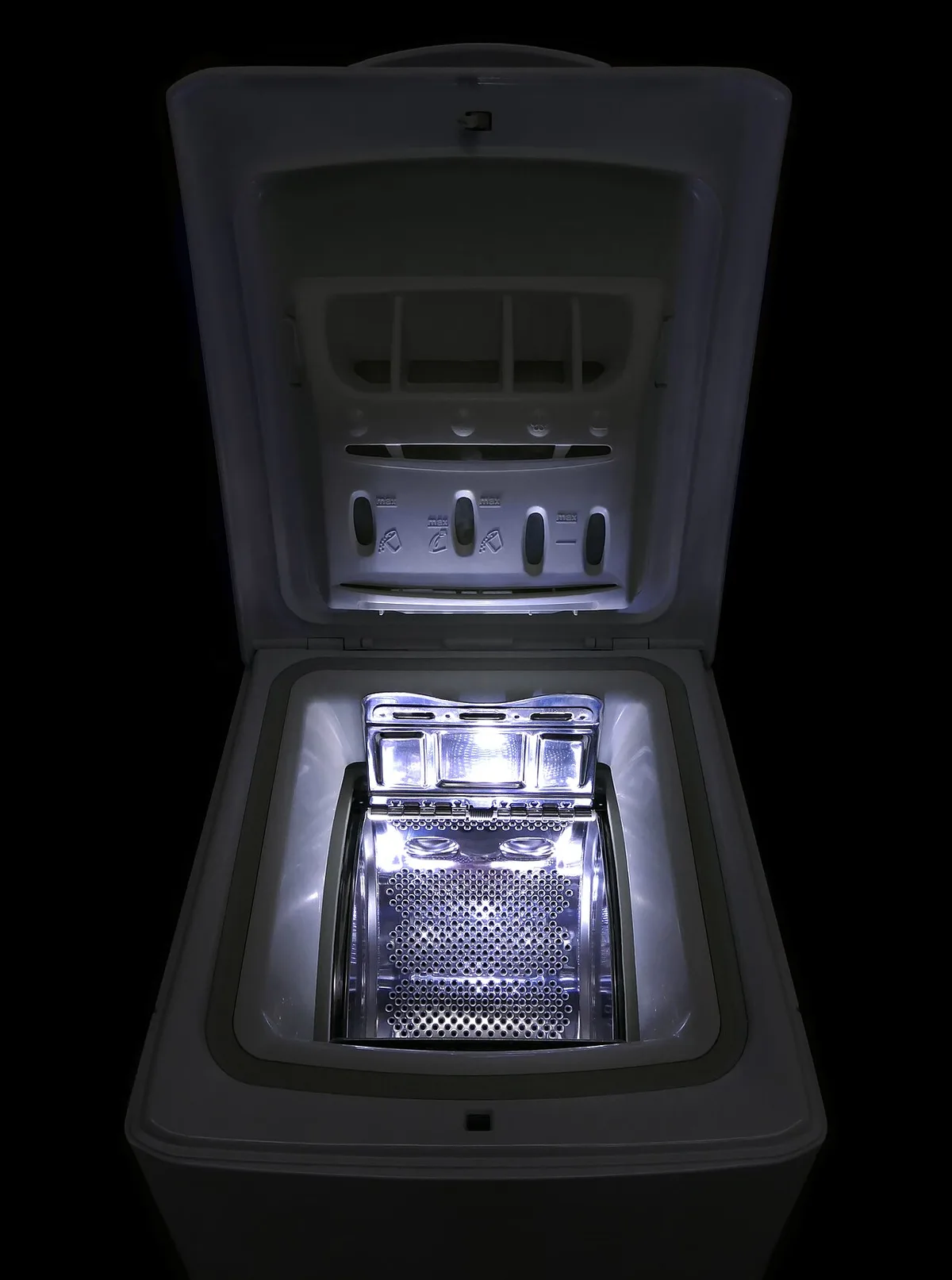
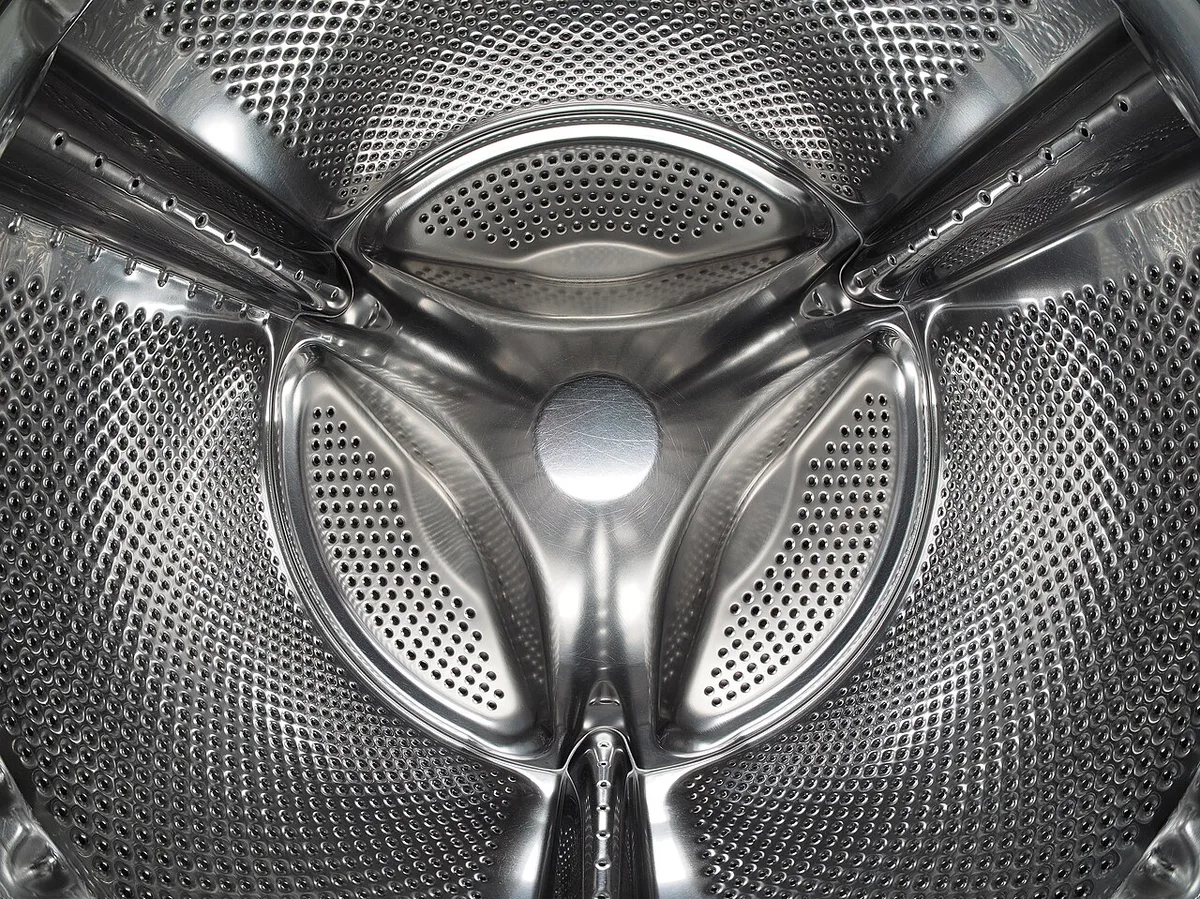
The top-loading photograph shows a lid opening upward, while the front-loading drum photograph represents a different access arrangement. Neither image supplies installation dimensions. Use the exact drawing to understand what must remain accessible, and ask the installer to resolve uncertain conditions before the purchase becomes dependent on a guess.
Use geometry as a record, not approval
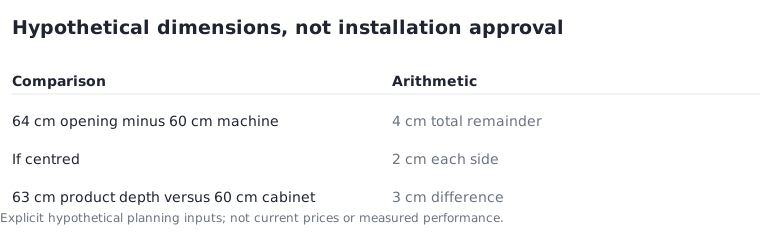
For a hypothetical alcove 64 centimetres wide and a machine 60 centimetres wide, the arithmetic remainder is 4 centimetres in total. If centred, that is 2 centimetres per side. Those calculations do not establish compliance with the manual, the suitability of connections or the space required behind the appliance.
Record depth and height independently rather than treating a passing width comparison as the whole decision. An assumed 60-centimetre cabinet depth and 63-centimetre product depth differ by 3 centimetres, but even that comparison needs the exact definitions used in the drawing. These invented measurements illustrate a worksheet, not a recommended installation.
Separate additional equipment and services
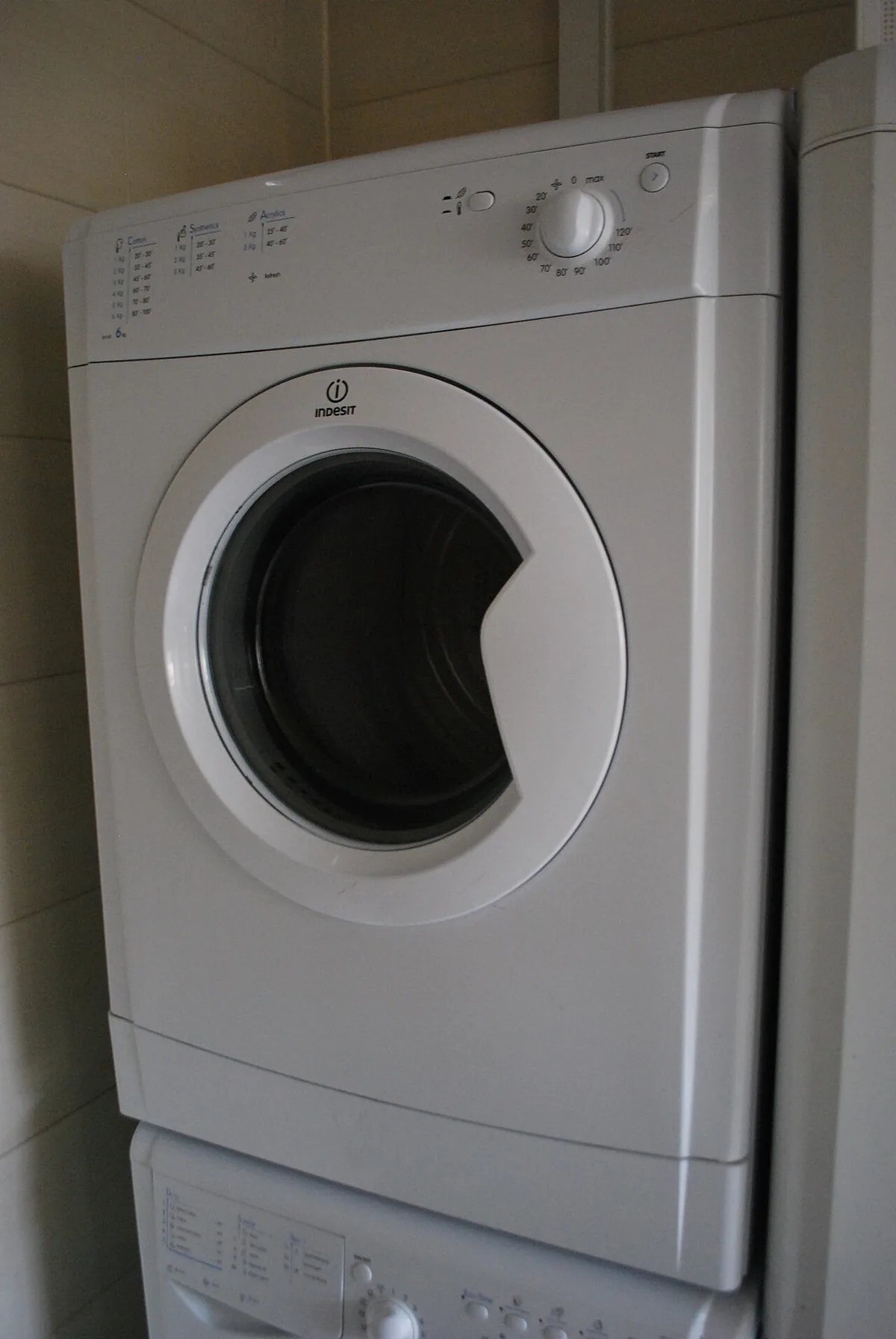
If the plan includes a separate dryer, identify its own installation requirements and any specifically approved combination or accessory. The historical dryer photograph is not a recommendation to copy the pictured stack. Do not assume that two appliances with similar widths can be safely combined in the same arrangement.
Energy Saving Trust distinguishes wash-only and wash-and-dry information on combination-machine labels. Keep that functional choice separate from the physical installation plan. A washer-dryer may change the equipment list, but it still requires its own model-specific instructions and a clear understanding of what the seller's installation service covers.
Energy Saving Trust: home appliance labels ?
Agree the scope in writing
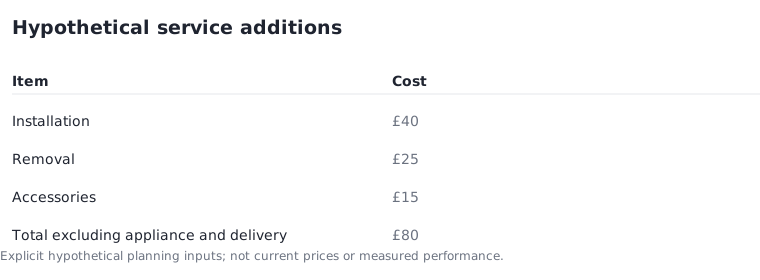
Ask which tasks are included, what conditions must be ready before arrival and what happens if the location is unsuitable. For a hypothetical budget, £40 installation, £25 removal and £15 required accessories total £80 in services and additions, separate from the appliance price and any delivery charge.
These invented amounts are not current quotations. Save the actual written scope and list unresolved questions rather than assuming a service name covers every task. The final record should connect the exact model, measured location, approved accessories and responsible service provider, allowing the order to proceed with specific answers instead of a general assurance that the machine should fit.