Keep washer-dryer washing and drying capacities separate
Read both sides of the label and plan the actual sequence before comparing a combination appliance.
Updated:
Read the two sets of information
Energy Saving Trust explains that a washer-dryer label separates wash-and-dry information from wash-only information. Read the rated capacity, consumption and duration in the relevant part rather than taking a single prominent number as the answer to every laundry task. Save the exact model sheet for reference.
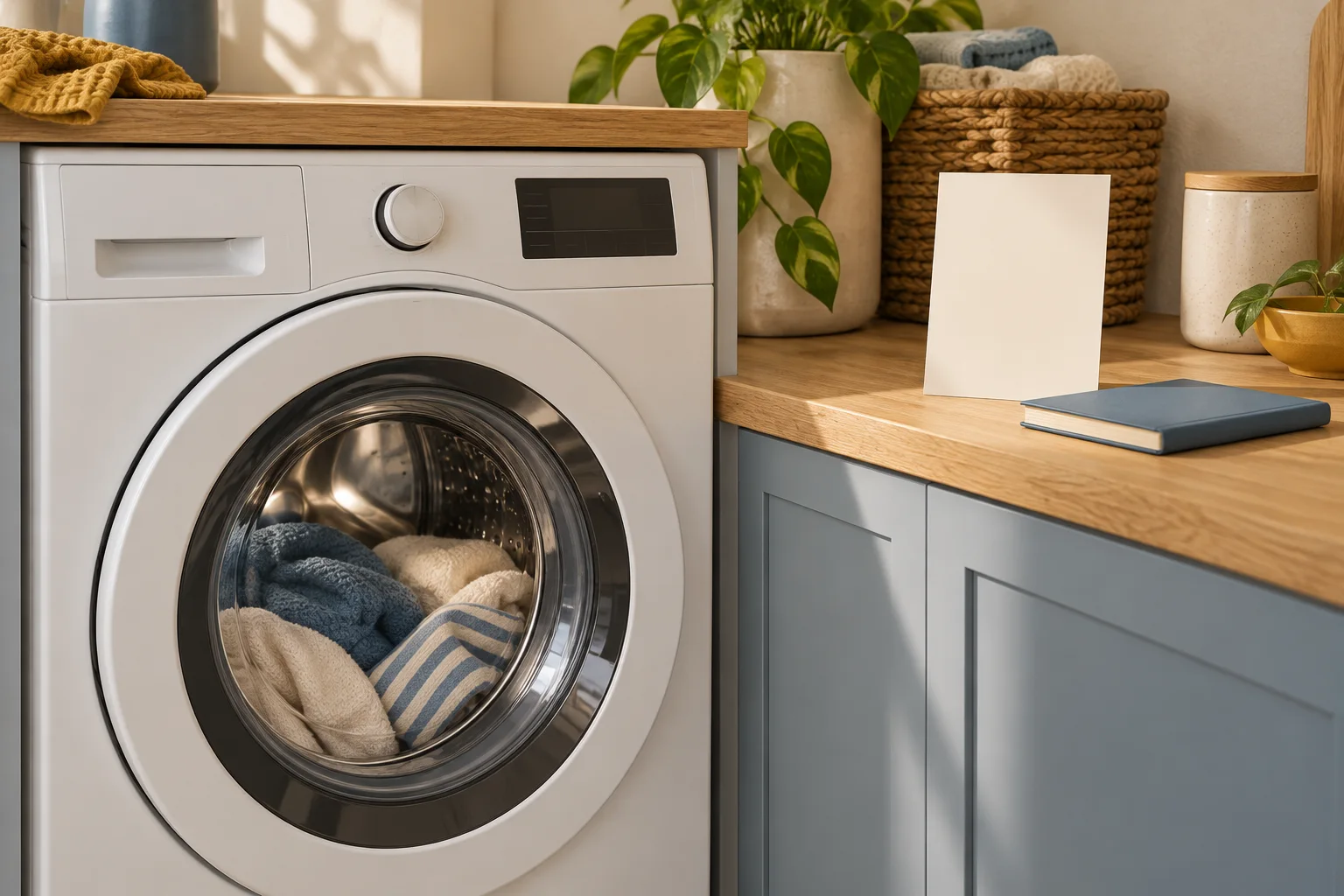
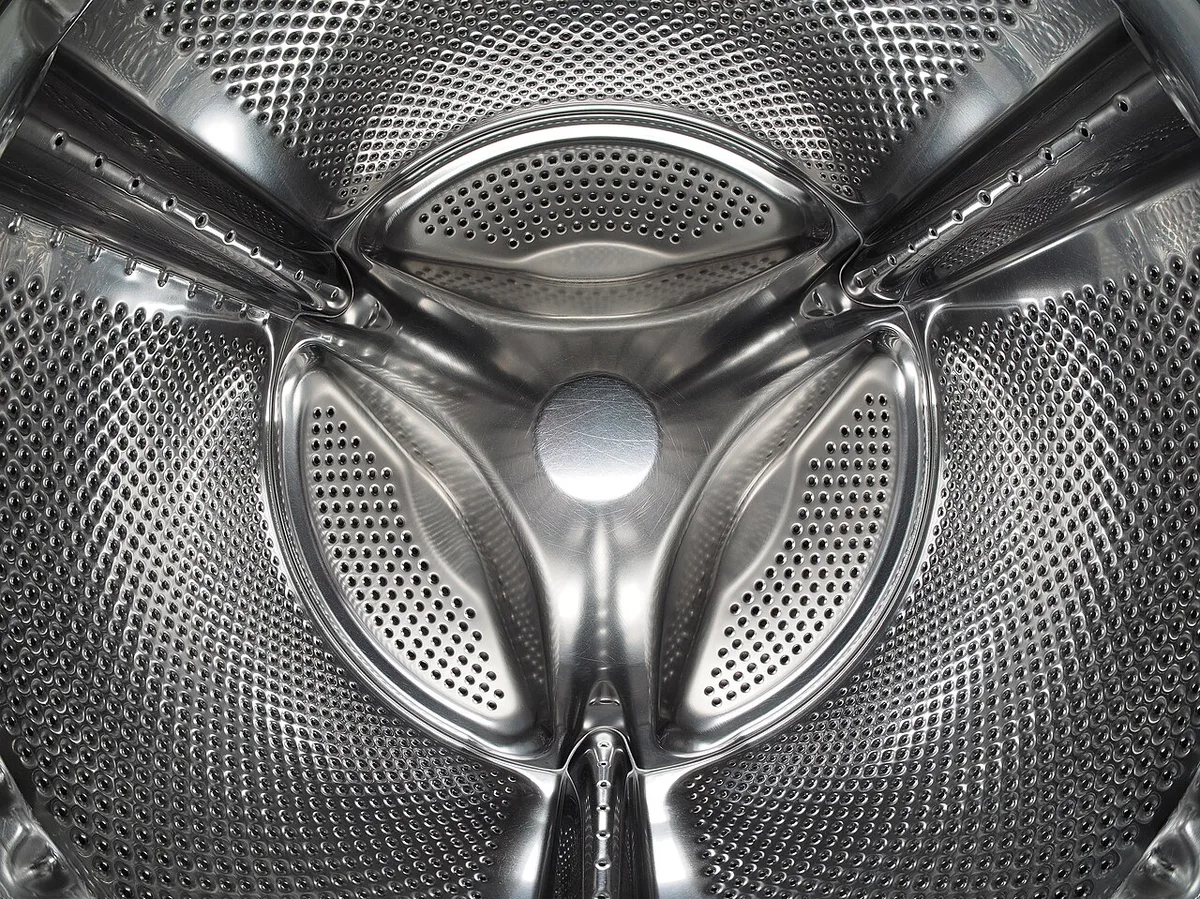
The drum photograph illustrates washing-machine construction but is not a photograph of a verified combination model. It cannot establish a drying capacity. Use it as context for the loading question, while obtaining the actual specifications from the manufacturer rather than inferring functions from a similar-looking circular door.
Energy Saving Trust: home appliance labels ?
Describe the sequence you intend to use
Decide whether you expect to wash and dry the same load in one sequence, remove some items before drying or use other drying arrangements. Check the programme and fabric instructions for the exact appliance and garments. Do not assume every item suitable for washing is suitable for a drying programme.
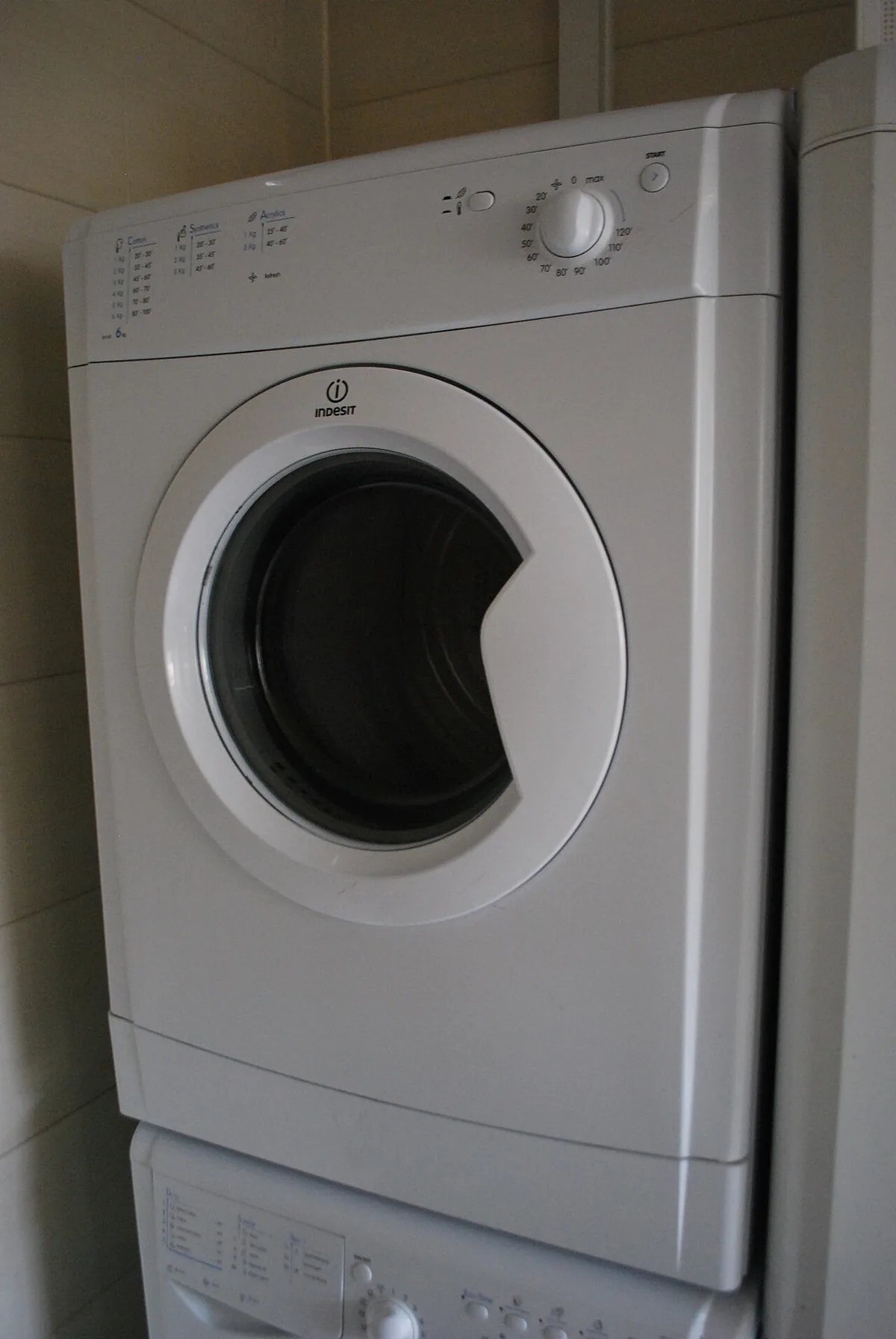
The historical separate dryer photograph shows a different appliance arrangement from a washer-dryer. It is not evidence that stacking is approved for a particular pair. Keep the choice between separate and combined equipment tied to the available space, exact installation requirements and the routine you actually intend to follow.
Use an example that preserves both limits
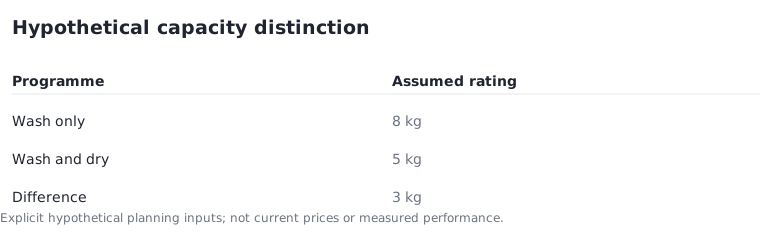
Suppose an invented model is rated for an 8-kilogram wash-only programme and a 5-kilogram wash-and-dry programme. An 8-kilogram washing load exceeds the assumed combined-programme capacity by 3 kilograms. That arithmetic explains why the two ratings should remain visible; it does not provide instructions for dividing or drying a real load.
Check the actual manual for permitted loads and programmes rather than copying the example. The difference between the ratings does not establish the energy used, the time required or whether a different programme has the same limits. Treat each field as a specific piece of information with its own basis.
Compare energy on matching programme scopes
For a hypothetical illustration, assume wash-only information of 50 kWh per 100 cycles and wash-and-dry information of 250 kWh per 100 cycles. Over 100 cycles at an assumed 25 pence per kWh, the corresponding calculations are £12.50 and £62.50. These invented figures demonstrate different scopes, not actual product performance.
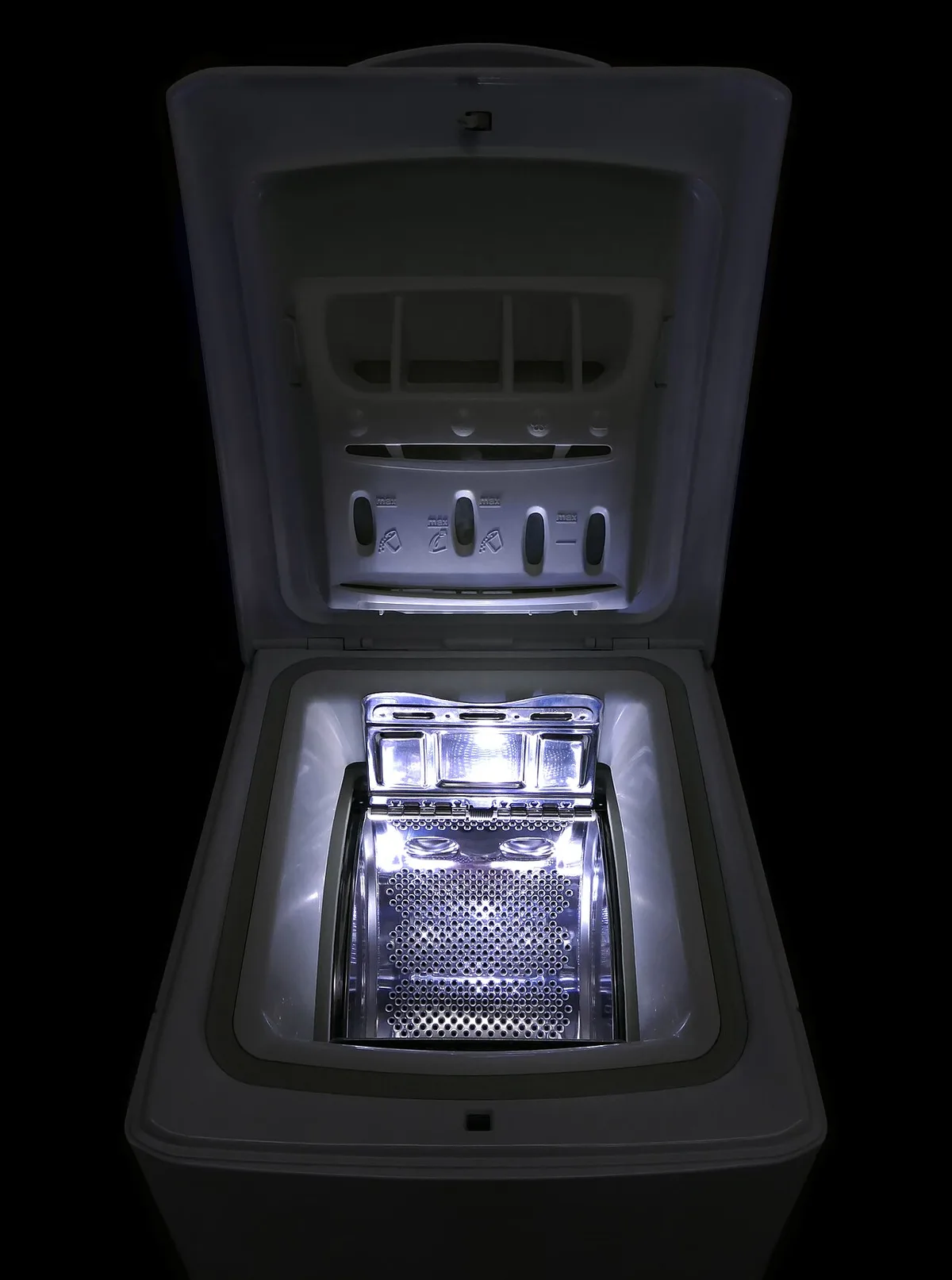
Do not add those two totals for the same 100 combined cycles if the wash-and-dry figure already includes washing. The top-loading washing-machine photograph provides a contrast with another wash-only format; it does not supply a drying figure. Check what each published number includes before combining costs in a household plan.

Keep the official record with the shortlist
GOV.UK identifies the product information sheet as part of appliance energy information. Store the exact sheet and programme table beside your intended load sequence. If a retailer's summary appears to combine or omit ratings, ask for clarification before relying on it in a comparison.
For an assumed purchase budget, a £650 appliance, £40 installation and £25 removal total £715 before any additional delivery or accessories. That initial total is separate from the programme-cost examples. The useful outcome is a comparison that shows what the machine can do in the intended sequence, with no hidden assumption that the washing and drying ratings are identical.
GOV.UK: energy information and current tumble dryer labelling ?